RealtyTrac recently released its Q3 Zombie Foreclosure and Vacant Property Report, which shows 20,050 residential properties in the foreclosure process – but not yet repossessed – were vacant “zombie” homes as of the end of the third quarter of 2015, down 27 percent from the previous quarter and down 43 percent from a year ago. Vacant residential properties in the foreclosure process accounted for 1.3 percent of all vacant residential properties, with bank-owned homes (REO) accounting for another 1.9 percent of all vacant properties as of the end of the third quarter. The report shows a total of 1.5 million vacant U.S. residential properties, 1.8 percent of all 84.7 million U.S. residential properties.
Author Archives
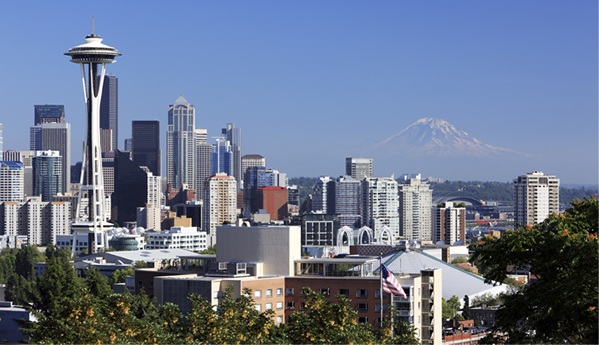
Seattle’s commercial real estate market is hotter than San Francisco and New York
Seattle’s commercial real estate market just keeps getting hotter. It is now the fourth-strongest overall real estate market in the nation, and it’s the third best place to invest.
That’s how the Puget Sound region ranked in the newly released 2016 Emerging Trends report published by nonprofit research group the Urban Land Instituteand global accounting firm PwC.
This Isn’t a Housing Bubble: Here’s Why
Home prices are rising rapidly, but economists are deflating concerns that another “housing bubble” is brewing.
A recent report from CoreLogic shows that twice as many metro markets are considered “overvalued” – prices are inflated relative to incomes — in the second quarter of this year compared to the first three months of the year. But economists say it’s not a housing bubble because bubbles eventually burst and home prices this time around aren’t likely to fall.
91% of Properties Now Have Equity
About 759,000 properties regained equity in the second quarter, bringing the total number of residential mortgages that are lower than their property’s value to about 45.9 million. That equates to about 91 percent of all mortgaged properties. Borrower equity has risen year-over-year by $691 billion, according to CoreLogic’s second quarter equity report.
Millennials and the New American Dream
A survey conducted exclusively among millennial as part of the Responsive Home project – a venture between Builder magazine and Pardee Homes to design, build and sell the ideal home for the 21st century buyers – identifies the driving factors behind new age home buying habits and de-bunks millennial home buying myths.
Foreclosures Down 68% From Peak
Foreclosures are falling fast. Since reaching a peak in September 2010, the number of foreclosures has plunged 68 percent – from 117,225 nationwide to 38,000 as of July, according to CoreLogic’s July 2015 National Foreclosure Report, released recently.
In the past year alone, foreclosure inventory has fallen by nearly 28 percent and completed foreclosures have dropped about 24 percent. Completed foreclosures are the total number of homes actually lost to foreclosure.
Fannie Mae Lowers Mandatory Waiting Period After Bankruptcy, Short Sale and Pre-Foreclosure
It’s getting easier to get approved for a mortgage. Fannie Mae has reduced the mandatory waiting period for a mortgage after bankruptcy, short sale, or pre-foreclosure. Borrowers no longer need to wait 4 years before re-applying to get a mortgage. Borrowers can now re-apply for a loan just 2 years after a bankruptcy, short sale or pre-foreclosure.
Mortgage Rates at Recent Lows After Jobs Data
Mortgage rates fell to their lowest levels in more than a week on Friday, following the release of August’s official employment figures. While the headline job creation was weaker than expected, several components of the report offset the weakness. Previous months were revised to show better job creation, the unemployment rate fell to 5.1, and wages grew slightly faster than expected.
International Buyers Flow Into U.S. Housing Market, China Tops List
This year, for the first time since the National Association of Realtors has tracked foreign buyers of U.S. real estate, buyers from China have surpassed for the first time Canadians, Europeans, Mexicans and Middle Eastern home buyers as the top overseas purchasers of homes in the United States. Chinese investment in U.S. residential real estate has grown from a measly $50 million in 2000 to an eye-popping $28.6 billion in the year ending in March 2015, up 72 percent from a year earlier, double the amount spent a year earlier, surpassing all other foreign buyers. All told, overseas home buyers spent a record $104 billion buying U.S. homes in the 12 months ending in March 2015, with Chinese buyers leading the pack. In the 2014 survey, foreigners spent $92 billion on U.S. homes over a 12-month period, up 35 percent from a year earlier. Chinese buyers are now the biggest international buyers of U.S. real estate in terms of dollar volume, total units, and average price paid. Moreover, 76 percent of Chinese buyers pay cash.
MBA Forecasts Housing Demand Over Next 10 Years
The Mortgage Bankers Association (MBA) has just released a paper, Demographics and the Numbers Behind the Coming Multi-Million increase in Households, forecasting housing demand over the next ten years. Their study used date from 1975 – 2014 a period encompassing several market and housing cycles and the short version of its conclusion was the “By 2024, demographic and economic changes will bring what could be one of the largest expansions in the history of the U.S. housing market – 15.9 million additional households.” Even if household formation remains at 2014 low rates, demographic changes alone should account for 13.9 million new households by 2024.