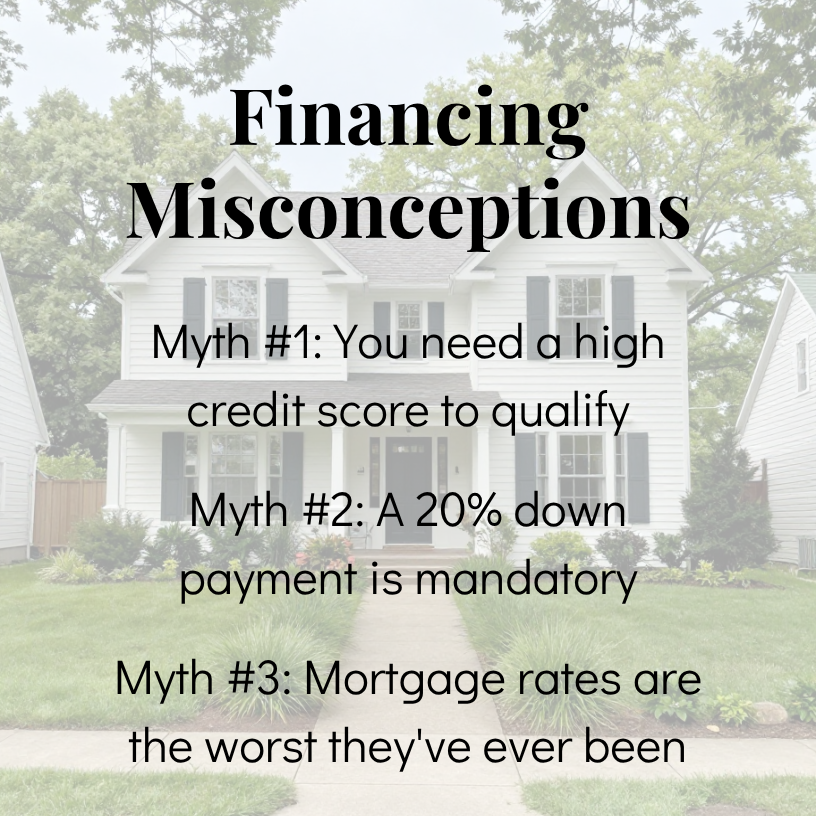
Financing Misconceptions


Myth #1: You need a high credit score to qualify — Buyers can qualify for government-backed mortgages and other conventional loan programs with credit scores around 620 — and in some situations, there is no set minimum. The higher the credit score, the more options a buyer has to get a lower interest rate.

Myth #2: A 20% down payment is mandatory — Many loans can require as little as 3% down for first-time buyers, while some VA and USDA loans don’t have any down payment requirement.

Myth #3: Mortgage rates are the worst they’ve ever been — The peak was actually in October 1981, when 30-year rates hit 18.6%. Rates have bounced around the 7% range in recent years and are currently in the 6.4% range after dipping briefly below 6% in late February.

Have questions? Contact me, I’ll be happy to help!

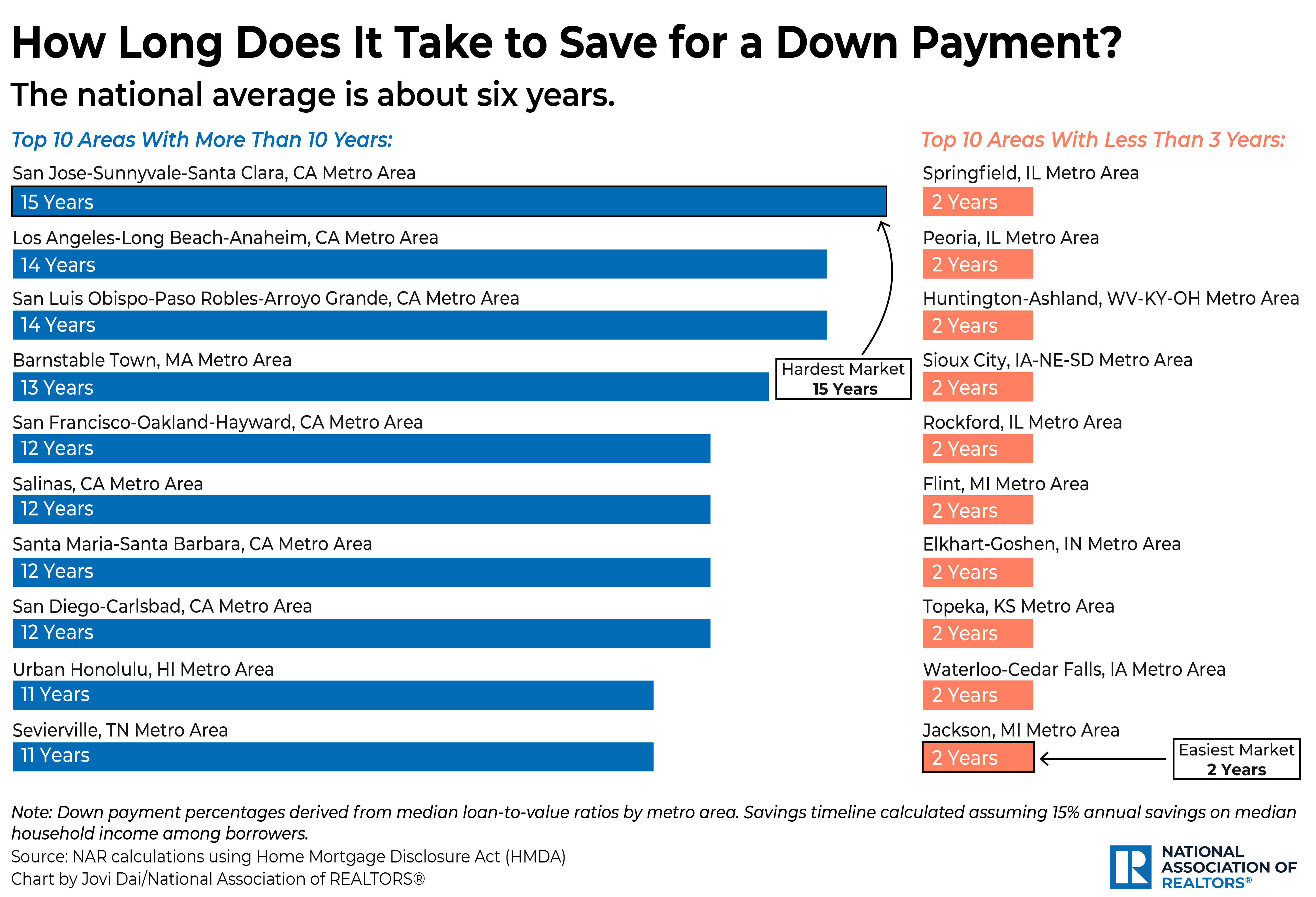
The Down Payment Clock


We talk a lot about how hard it is to save for a down payment. The age of first-time homebuyers has been rising, and the ripple effects are real: delayed homeownership means delayed wealth-building, which means the gap between those who own and those who rent widens.

But, like almost everything in real estate, it’s not the same everywhere. In some markets, the “down payment clock” moves quickly. In others, it moves slowly. And understanding which clock you are on might be one of the most practical insights for buyers.

Read more details

Tips for Co-buying


The median age of first-time homebuyers hit a record high of 40 last year, according to data from the National Association of Realtors. Low inventory and rising prices have pushed homeownership out of reach for many.

To make housing more affordable, some people are embracing a nontraditional path to owning a home: co-buying with a friend.

Co-buying is a great way for buyers to boost borrowing power, but there are pitfalls. Check out these tips

New Rule for Non-Financed Transactions

A new federal residential real estate rule aimed at cracking down on money laundering went into effect March 1st. It impacts transactions involving buyer entities or trusts where the purchase is not financed, such as all-cash sales and sales involving non-regulated lenders. Here’s what you need to know…

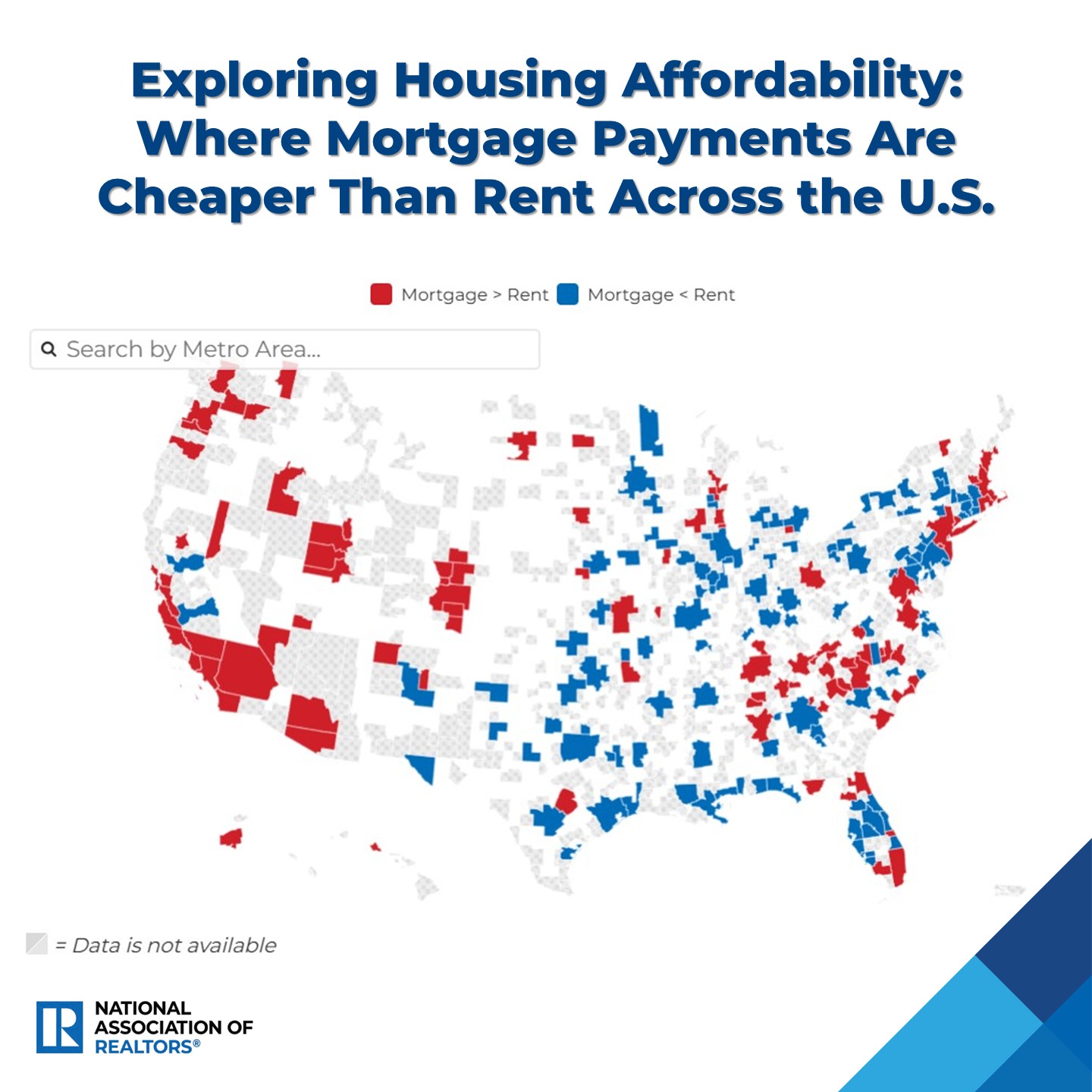
Where Mortgage Payments Are Cheaper Than Rent

Over the past five years, housing prices and rents have surged, making it difficult to save for a down payment. However, in 119 out of 215 metro areas, monthly mortgage payments are lower than rent, mainly in the Midwest and South.

Explore the data collected by the National Association of Realtors.

Buying and Selling a Home at the Same Time: How Bridge Loans Can Help


One of the biggest stressors for home buyers and sellers is the prospect of being financially responsible for two homes. To avoid that possibility, many buyers make their offer contingent on the sale of their existing home. But contingencies can weaken buyers’ chances of landing the home they want. So, some buyers lean on personal loans, piggyback loans or even their 401(k) savings.

Find out why more borrowers are temporarily tapping the equity in their current home to avoid making a contingency offer on their next home.

Read the details

What Percentage of Your Paycheck Should Go To Your Mortgage Payment?


The road to homeownership has been a challenge for many Americans—stubborn mortgage rates and inflation keep this dream out of reach for many. And for those who can afford a home, not ending up “house poor” is also key.

Read more…


The Five-Year Rule for Home Price Perspective


Headlines are saying home prices are starting to dip in some markets. And if you’re beginning to second guess your plans based on what you’re hearing in the media, here’s what you need to know.


Final Walk-Through Red Flags


Final walk-throughs can uncover problems that could delay closing. Most walk-throughs go smoothly, but it’s useful to know what to watch for and how to resolve issues quickly.

Read the details…


The Biggest Perks of Buying a Home This Winter


Waiting for perfect market conditions often means missing out. Because what you may not realize is, if you’re ready and able to buy, this time of year could actually give you an edge. Here’s why. As the weather cools down, the housing market can too – and that works in your favor.

Read the article…