Sold Out: These 10 U.S. Cities Have the Biggest Housing Shortages

top-10-markets-feeling-the-crunch

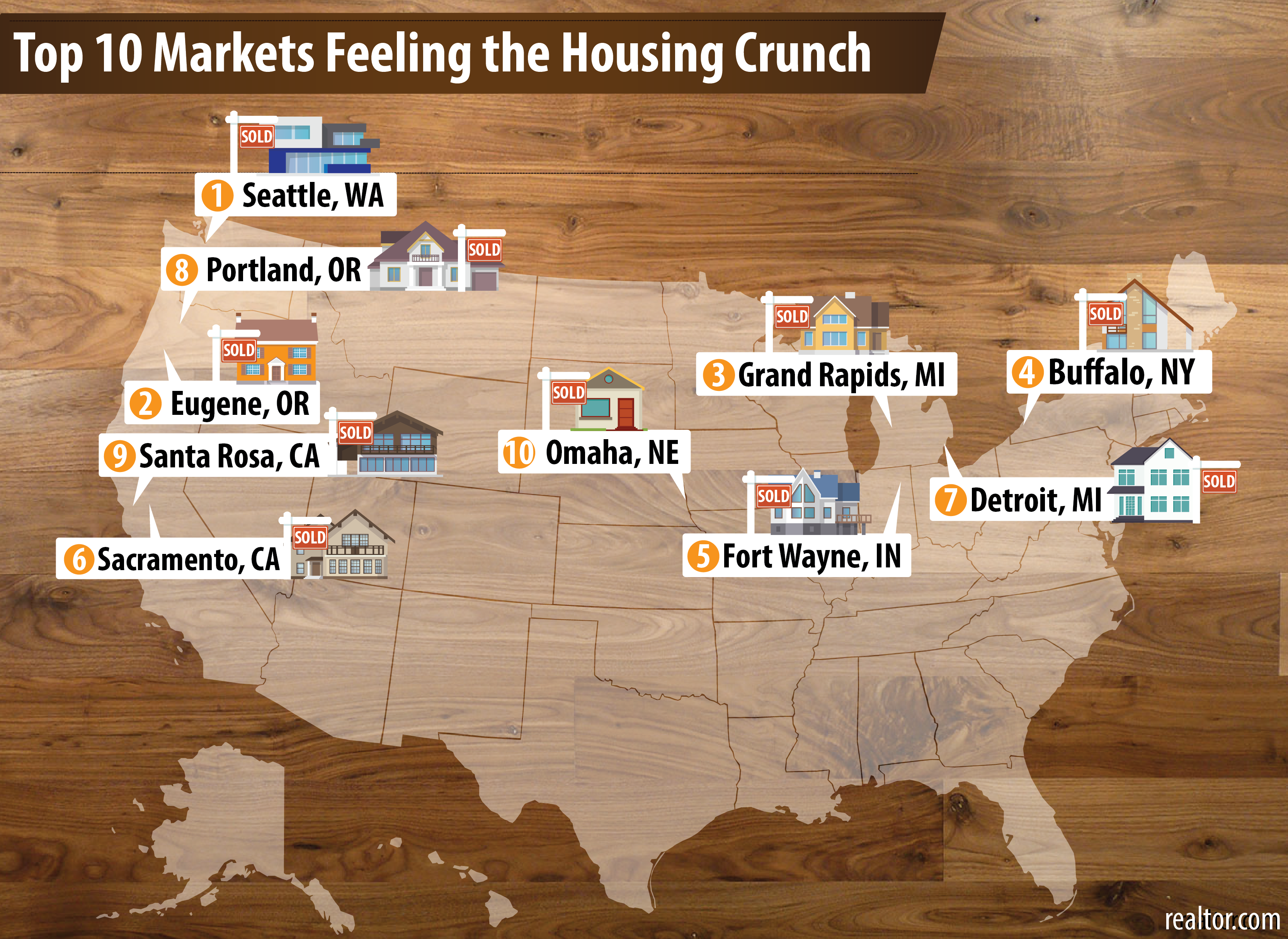
It’s a parched, scorching desert out there for many U.S. home buyers. For the past 28 months, the housing market has been defined not just by demand—which remains sky-high in many parts of the nation—but also by the shrinking number of available homes for sale. So what are the signposts of a tighter-than-tight marketplace? Buyers are jumping on realtor.com® listings within seconds of their initial postings. Wanna-be homeowners are burrowing themselves into ever-scarcer, ever-busier open houses and going a little mad trying to get in the first bid. Real estate agents are knocking on hundreds of doors just to squeeze out one more listing.

And who are the biggest losers in such a skintight, depleted market? First-time buyers with limited budgets, of course.

Read the article on realtor.com® and see where Seattle ranks…

More Buyers and Sellers Think RE/MAX

most-thought-of-national-brand

Brand awareness matters. It determines what neighbors recommend to one another, the name consumers enter into search engines, and who people trust as their guide when making big life decisions – such as buying or selling a home. Which is why when a study shows RE/MAX is the real estate brand that comes to mind most, it’s a big deal.

Brand power – just part of the full package of experience and service RE/MAX agents bring to the table.

Contact Jennifer to put the RE/MAX brand power to work for you!

Open Floor Plan Still Popular

Front Door

Open floor plans continue to reign. Eighty-four percent of builders say that in the typical single-family home they build, the kitchen and family room arrangement is at least partially open. Fifty-four percent say it’s completely open, according to responses from a September 2016 National Association of Home Builders/Wells Fargo Housing Market Index.

“Completely open” essentially means the two areas are combined into the same room. Partially open signifies areas separated by a partial wall, arch, counter, or something less than a full wall.

Seventy percent of recent and prospective home buyers say they prefer a home with either a completely or partially open kitchen-family room arrangement; 32 percent say they prefer the arrangement completely open, according to an NAHB survey.

Only 16 percent of buyers say they want the kitchen and family rooms in separate areas of the house.

As demand continues to increase for open floor plans, homeowners of existing-homes are also looking to open up their kitchen and family room areas. Professional remodelers report that 40 percent of their projects involved making the floor plan more open by removing interior walls, pillars, arches, etc., according to first quarter of 2016 data in the Remodeling Market Index.

Source: “Builders Satisfy Demand for Open Floor Plans,” National Association of Home Builders’ Eye on Housing blog

FHA Mortgage Insurance Premium Reduction

Family

Lower costs are coming for homebuyers seeking a Federal Housing Administration -insured mortgage.

FHA recently announced that they are cutting annual premiums for mortgage insurance from 0.85 percent to 0.60 percent, a move the National Association of Realtors® said breathes new life into the program.

“FHA mortgage products exist to serve an important mission: providing homeownership opportunities to creditworthy borrowers who are overlooked by conventional lenders,” said NAR President William E. Brown, a Realtor® from Alamo, California and founder of Investment Properties. “The high cost of mortgage insurance has unfortunately put those opportunities out of reach for many young, first-time- and lower-income borrowers. Now, we have a real opportunity to get back on track.”

Read the article…

The 5 Real Estate Trends That Will Shape 2017

2017

We won’t pretend to know everything that 2017 will bring—heck, 2016 sure surprised us—but we’re pretty certain there will be changes. A lot of them. And while the surprise triumph of Donald Trump in the presidential election won’t alter the fundamentals shaping the 2017 real estate market, its impact is already being felt.

We’ve seen interest rates jump since the election, a movement that’s likely to affect the youngest generation of home buyers.

Just like last year, realtor.com®’s economic data team analyzed our market data and economic indicators to come up with a picture of the key housing trends for 2017. As we prepare to bid farewell to 2016, it looks like we’ll be saying goodbye to the last of the record-low interest rates of the past few years, too. Interest rates have shot up 40 basis points, or 0.4 percentage points, since Trump’s election.

Read more…

Home Sizes Shrink Yet Again

Front Door 2

New single-family home sizes continue to get smaller. In the third quarter of this year, the average square footage of a new single-family home dropped from 2,620 to 2,602 square feet.

The gradual decrease in new-home sizes reflects a trend among builders away from mostly focusing on just the higher end of the market and a greater renewed focus on the entry-level market.

“As the entry-level market expands, including growth for townhouses, typical new home size is expected to decline,” states the National Association of Home Builders on its blog, Eye on Housing.

Following recessions, single-family home sizes typically rise as high-end home buyers, who face fewer credit constraints, return to the market in higher proportions, builders note. Home sizes then historically fall prior to and during a recession as home buyers constrain their budgets.

“This pattern was exacerbated during the current business cycle due to market weakness among first-time home buyers,” the builders’ note on the Eye on Housing blog. “But the recent small declines in size indicate that this part of the cycle has ended and size should trend lower as builders add more entry-level homes into inventory.”

Source: “Single-Family Home Size Trending Lower,” National Association of Home Builders Eye on Housing blog

Fed Hikes Rates: The Mortgage Impact

Time to Buy

The Federal Reserve hiked short-term interest rates recently, in a move largely predicted by economists. So, what does this mean for mortgage rates and buyers?

First off, the Fed does not set mortgage rates. Short-term rates are different from long-term rates. Mortgage rates typically follow long-term bond rates, such as the 10-year U.S. Treasury note. Longer-term rates typically adjust before the Fed makes a move.

Indeed, mortgage rates have risen near to 60 basis points since the presidential election. More than twice the quarter-point increase that the Fed voted on Wednesday.

The Fed announced that it expects to raise short-term rates three times next year by a total of 75 basis points.

“That means rates like we’ve seen for most of the past five years are indeed history,” writes Jonathan Smoke, realtor.com®’s chief economist, in his latest column. Mortgage rates in the 3 percent range are gone.

“Mortgage rates will move higher before the Fed acts again, so if the Fed carries out its three planned hikes in 2017, we could come close to 5 percent on 30-year conforming rates before the end of next year,” Smoke notes.

On Wednesday, the average 30-year conforming rate was just under 4.2 percent.

Smoke believes that rates are more likely to move in the month ahead of each key Fed policy meeting. As such, the important meetings to note are in March, June, September, and December 2017.

How big of an impact could rising rates have in the coming months? A median-priced home would be $978 per month payment at Wednesday’s rate of 4.2 percent (and assuming a 20 percent down payment), realtor.com® notes. Take that rate to 5 percent, the monthly payment jumps up to $1,074, nearly $100 more.

“If you intend to buy next year and finance the purchase with a mortgage, acting sooner rather than later will cost you less,” Smoke says is the message to home buyers.

Source: RealtorMag
Real Estate Pros Divulge Top Design Features

Only a Realtor

BUILDER recently asked real estate professionals to share their thoughts about the top design trends their clients are currently requesting. Here are some of the top design trends that real estate pros said are in demand:

  • Open layouts
  • Neutral color schemes
  • Multigenerational floor plans
  • First-floor master suites
  • No dining rooms
  • White kitchens
  • Extra-large garages
  • Big closets
  • Finished basements with 9-foot high ceilings
  • Barn sliding doors

Source: “REALTORS®’ Most In-Demand Design Trends,” BUILDER and “15 Things REALTORS® Want Builders to Know,” BUILDER

6 Fall Advantages for Buyers

With warm temperatures and long days, summer has traditionally been the high season for buying real estate. However, as the infographic below shows, advantages for buyers crop up when temperatures fall!

Infographic2