Virtual Reality in Real Estate

virtual-reality

The day many tech lovers have been waiting for is here: Google Daydream View is now available in stores. The new virtual reality headset connects with a smartphone (specifically, Google Pixel) to immerse users in their favorite games, movies or even the latest news story. And at just $79, Daydream is making VR technology more accessible to consumers than ever before.

But the uses of virtual reality technology go beyond entertainment. Here are a few ways VR is making its way into real estate.

1. Open houses

Virtual reality headsets, about the size of a scuba mask, can provide 360-degree virtual reality property tours of homes. The headsets completely fill the user’s field of vision with a view of the home, allowing them to look up, down and from side to side. Developers are working on adding more tactile features to the experience, so users can do things like see their own hand opening a door, reports the New York Times.They’re even developing smells. One day Realtors might be able to add the smell of virtually baking cookies to their virtual open house.

2. Long-distance shopping

Virtual reality home tours give out-of-town buyers (and local buyers, too) another tool to help narrow down their choices of homes they’d like to physically visit in a limited amount of time.

3. Staging

More affordable than hiring a pro to stage your home, several virtual options allow you to add furniture and decorations to vacant rooms using computer technology. It can help buyers envision a property with different furniture and paint.

There’s a lot more to a real estate transaction than VR goggles can replace. When you’re ready to buy or sell your home, I’ll be happy to help!

RE/MAX is Now 110,000 Agents Strong

110-thousand-agents

When something’s great, people want to be part of it. And that’s why more than 110,000 agents now call RE/MAX home.

The global network, in over 100 countries and territories, has grown every quarter for four straight years. That growth means more yard signs, more homes sold, more satisfied clients and more top professionals working together to serve buyers and sellers.

It’s another reminder that RE/MAX is the right choice for agents who strive to be great – and for clients looking to work with the best.

Big Expectations That’ll Drive Housing in 2017

Young Family

The 2017 housing market is looking bright, fueled by a big wave of first-time home buyers emerging.

First-time home buyers are predicted to make up more than half of home buyers next year – up to 52 percent, surging from 33 percent in 2016, according to realtor.com®’s Active Home Shopper Report, based on survey data from buyers who plan to purchase homes in the spring or summer of 2017. Also, realtor.com® predicts that will spark greater demand for suburban homes in the new year.

Millennials are finally expected to unleash their buying arm in 2017. They are predicted to make up 61 percent of the first-time home buyers under age 35 in the new year. The top motivators getting millennials moving now are getting married or moving in with a partner, growing tired of their current living space, and planning to increase their family size.

Read the article on REALTORmag…

Predictions Roll in: 2017 Housing Forecasts

Thoughts

We can expect a hot year for home sales in 2017, according to recent forecasts from the National Association of REALTORS®, the Mortgage Bankers’ Association, Freddie Mac and Fannie Mae, and more.

NAR is predicting existing-home sales to reach 6 million in 2017, higher than its 5.8 million forecast for this year. But other entities are even more bullish. MBA is predicting home sales to eclipse 6.5 million next year, while Fannie Mae and Freddie Mac are both predicting 6.2 million.

A huge wave of Generation Yers, who have delayed home buying, are emerging into their key buying years. They are predicted to keep home sales and condo sales strong well into 2020, according to economists.

The top markets for price appreciation likely will be in Seattle, Wash.; Portland, Ore.; Denver, Colo.; and Boston, predicts Eric Fox, vice president of statistical and economic modeling at VeroForecast. These markets’ robust economies have growing populations but a tight supply of homes for sale on the market that will likely lead to some of the largest price increases across the country.

Meanwhile, new-home construction starts likely will tick up to about 1.5 million per year to 2024, predicts Forisk Research.

Home builders likely will continue to be more subdued, despite calls for more inventory.

“Home builders behavior likely is a continuing echo of their experience during the crash,” Pantheon Macro Chief Economist Ian Shepherdson told MarketWatch. “No one wants to be caught with excess inventory during a sudden downshift in demand. In this cycle, the pursuit of market share and volumes is less important than profitability and balance sheet resistance.”

Source: REALTORmag

What to Expect When You’re Inspecting

what-to-expect-when-youre-inspecting

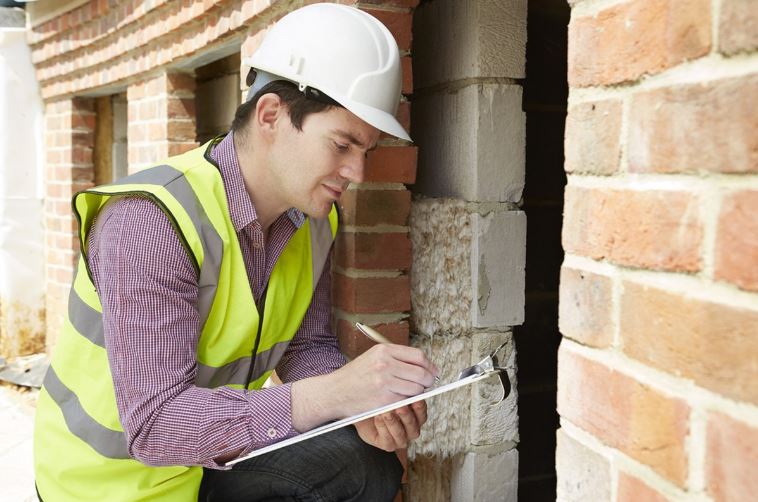
A home inspection can be a nerve-racking part of the home-buying process – but it is also a vital step. Here are a few things an inspector may find that could add to the cost of a home – or save you from buying a lemon altogether.

1. Lurking charges

Even though a home’s electrical system may seem to function adequately, inspections can reveal safety issues. This frequently happens with old wiring that’s corroded or outdated, or with new wiring that was improperly installed.

2. A failing grade

Poor grading, or a slope that drains water toward your house instead of away from it, can cause all kinds of problems such as flooded crawl spaces or basements, rotting walls and framing, and mold and foundation damage.

3. Trouble on top

Roofing materials don’t last forever, and inspectors often find problems with aging materials that will soon cause problems. The scale of necessary repairs can range from needing to replace a few shingles to needing an entirely new roof.

4. Mold

Especially in humid regions, mold can sprout anywhere moisture collects, like attics, basements and drywall around leaky pipes. If the inspector finds mold, a separate mold inspection may be required.

5. Foundation flaws

As a home settles over the years, the foundation can shift. Symptoms include cracks in the drywall, uneven floors, and doors and windows that won’t shut. While home inspectors can identify basic foundation issues, if they see something that seems structurally suspicious, they’ll often recommend you call a foundation engineer to assess the situation.

6. Not going with the flow

Inspectors often find clogged or bent gutters, or gutters that channel water too close to the house, where it can cause damage.

How concerned should you be if any of these issues appear on the inspection report? As an experienced Realtor, I will be able to translate the inspection and suggest remedies – or how fast you should run from a deal. Contact me for your real estate needs!

Home Buyer Advantage Starts Now

Family

Buyers had to be prepared to bring their housing A-game this year. Amid tight inventories of homes for sale and a tight lending environment, they’ve needed to get pre-approved for a mortgage, be laser-focused on what it is they want in in order to make quick decisions, and even forgo some contingencies to get the home they wanted.

Though active listings likely will fall more (8 percent over last year), the market still may be shifting slightly as the start of the school year arrives and give buyers more bargaining power, writes Jonathan Smoke, realtor.com®’s chief economist in his latest column.

Read the article on REALTORmag…

New-Home Sales Near 10-Year High

fb_reg_new_homes_0716

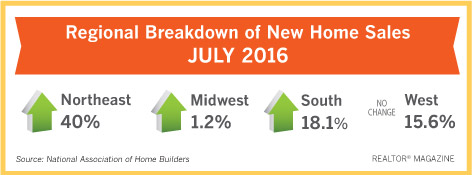
New-home sales in July jumped to the highest level in nearly a decade, with sales of new single-family homes climbing 12.4 percent month-over-month and reaching a seasonally adjusted annual rate of 654,000, the Commerce Department reported Tuesday. That marks the highest level since October 2007.

Low mortgage rates, improving income growth, and steady job creation have helped propel home buying for both new and existing homes. New-home sales have posted strong gains since the beginning of this year, up 13.3 percent compared to a year ago. In June, sales of existing homes also reached their strongest pace in nearly a decade, though they slipped in July, according to the National Association of REALTORS®.

Read the full article…

Under Contract? 5 Things NOT to Do Before You Close

Under Contract

The seller has accepted your offer, the inspector didn’t find any underground streams or shaky foundations, and the closing date is set. You’re in the homestretch! While you can breathe a little easier, remember, the deal’s not done until everyone signs all the (zillion) documents at the closing table. And, your lender can still change their mind. Here are some things to avoid in the run-up to the big day.

  1. Don’t mess with your income-to-debt ratio
    The ratio of your monthly income to your monthly debts is one of the main factors the lender considered when qualifying you. And your lender will probably run your financials two or three more times before closing. While it’s tempting, don’t take out a big loan for the new deck you want to install when you move into your new place. Don’t sign the lease on the new Audi that will look perfect in your new driveway. The bank looks at lease payments like any other debt payment.
  2. Don’t disappear
    Be sure to keep in touch with your lender and be readily available to immediately address any last-minute concerns.
  3. Don’t change jobs
    Lenders love stability. Switching jobs right before closing can make them anxious, and you want to give them every reason to feel confident. Most lenders prefer to have a two-year job history in hand, so making a big career move could slow things down, or squash the deal entirely.
  4. Don’t open new credit cards
    Yes, you’ll be buying furniture to fill those lovely rooms. Yes, you might need a new fridge. And yes, new dishes to match the new kitchen would be splendid. But resist the lure of opening new credit cards until after closing. Doing so can affect your credit score. For now, just open catalogs.
  5. Don’t be late
    Even though you may have been riding the real estate roller coaster and life’s been chaotic, be sure to stay current with all bill payments. Late payments, too, can affect that all-important credit score.

Wondering what else is involved in the final stretches of a home purchase? I will be happy to answer any of your questions!

Neighborhood Features That Drag Down Prices

Neighborhood

Living near bad schools can decrease a home’s value big time. Indeed, the median home price in ZIP codes with schools that receive a one to three rating (out of possible 10) is only $155,000.

Realtor.com® analyzed home prices and appreciation rates in U.S. ZIP codes to identify possible factors that could drag down prices. Researchers compared the median home price of the ZIP with that facility with the median price for all homes in the same county.

Here are five neighborhood features that had the biggest impact on dragging down nearby home prices.

4 of 5 Americans Rate Housing a Good Investment

Young Family

The majority of Americans say that owning a home is a good investment, according to a new poll of more than 2,800 registered voters commissioned by the National Association of Home Builders.

“The survey shows that most Americans believe that owning a home remains an integral part of the American Dream and that policymakers need to take active steps to encourage and protect home ownership,” says NAHB Chairman Ed Brady. Those surveyed were split on which one of the current presidential candidates they felt would be best for housing, at 37 percent each, while 25 percent of those surveyed said they “don’t know.”

The survey found that 72 percent of Americans say that they support the government providing tax incentives to encourage home ownership.

Eighty-one percent of 18-29 year olds surveyed say they want to be able to buy a home one day.

However, obstacles still remain in their path, as well as for others too. Among all those polled, 55 percent say that the biggest obstacle to buying a home is finding a home at a price that they can afford. Fifty percent said they were prevented from buying due to insufficient savings for a down payment, and 41 percent say they are struggling to get approved for a home loan.

Still, 36 percent of the more than 2,800 Americans surveyed say they hope to buy a home within the next three years, the survey showed.

Source: REALTOR Mag