Millennials Will Move to the ‘Burbs for Good Schools

Home

The next generation of home buyers say they will move to the suburbs if it means they can find quality schools there, according to a newly released survey by realtor.com®.

In fact, millennials – the generation born between 1980 and 2000 – are less likely than other generations to compromise on school districts when in house-hunting mode, the survey revealed. Fifty-two percent of millennials said school districts are a deal-breaker in their home search, compared to 31 percent of all buyers, the survey found.

Read the article…

6 Things Home Buyers Should Avoid Doing Once They are Preapproved for a Mortgage

Checklist

You have done the hard part in the home buying process and chosen a lender and a real estate agent to work with. You have also gone out and found the home of your dreams! Best of all, your team has done a great job of negotiating the best deal for you.

Now, as a buyer, all you have to do is sit back and wait for your loan to close … right? Wrong!!

Let’s start with the “do’s” …

Why Buyers Are Annoyed With New Homes

An increasing labor shortage among homebuilders reportedly is causing more new homes to be delivered late, and buyers say they’re getting frustrated that builders don’t come back to fix common issues such as sticky doors and loose floor tiles after they move in.

“Builder tardiness” is a growing problem because the economic downturn drove hundreds of thousands of craftsmen and laborers away from housing and into other industries — and they’ve yet to return to construction, the Los Angeles Times reports. The labor shortage has become “substantially more widespread” since last year, according to the National Association of Home Builders.

“The incidence of reported shortages is now surprisingly high relative to the current state of new-home construction,” NAHB economist Paul Emrath noted in a recent report.

About two out of every three builders report paying higher wages due to the labor shortage. What’s more, nearly as many say they’ve had to raise home prices, too. Builders report that their direct labor or employee costs have risen 2.9 percent over the last six months, while subcontractor costs have increased 3.8 percent, according to NAHB.

Read the article…
Increase in FHA Fees is Sinking Deals

The Federal Housing Administration’s rate increases in mortgage insurance have caused buyers to walk away and transactions to fall through, according to the National Association of REALTORS®’ second Survey of Mortgage Originators, which includes questions to lenders about the impact of changes to the FHA program. In recent years, FHA has increased its premium structure as a way to make up for the 2 percent capital reserve ratio it’s required to keep but lost when many loans went sour during the housing crisis.

The rise in FHA fees is also pricing some buyers out of the market. Lenders surveyed by NAR report that 5.7 percent of originations were lost because of the increase in FHA fees. That would correlate to about 200,000 to 250,000 home sales lost, according to NAR estimates.

Read the article…

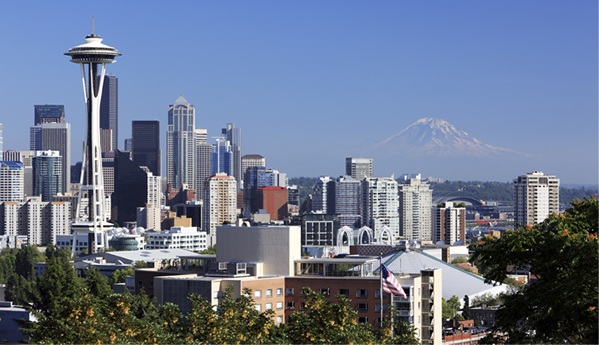
Seattle’s Median Home Price Sets All-Time Record

Prices Rising

The median house price in Seattle just set a record, topping the 2007 peak for the first time since the Great Recession.

The median price of a house that sold in the city last month was $543,500, up 16.9 percent from a year earlier and 8.9 percent from June, the Northwest Multiple Listing Service reported last Wednesday. The previous peak was $501,000, in August 2007.

Read the details…

5 Mistakes First-Time Home Buyers Make

Home

First-timers can be eager to jump into home ownership. But real estate experts say they see them committing the same mistakes, time and time again. Here are some of the most common ones, as identified by experts in a recent CNBC article…

Despite Predictions, Baby Boomers Aren’t Downsizing Yet

Baby boomers aren’t showing any signs of leaving the single-family home market that has defined their generation’s real estate habits, despite many predictions that they would by now. As boomers hit age 65 and become empty nesters, many housing analysts forecasted that a huge wave of them would downsize and move into an apartment, condo, or townhouse.

But Fannie Mae researcher Patrick Simmons says that isn’t happening yet.

Read the National Association of Realtors article…

10 Hottest Markets for Millennial Buyers and Sellers

Seattle

When it comes to building a booming real estate business, you’ve got to know where the next hot group of buyers and sellers may be focusing their home seeking-attentions. Popular beliefs tell us that millennials—those between the age of 18 and 34—just aren’t buying homes. Right?

Not so fast. The official homeownership rate published by the Census gives a misleading picture of homeownership trends. In fact, homeownership among young adults is not too far off from where demographics say it should be.

And, as it turns out, young adult homeownership is actually on the rise. Is your market poised to become the next hotbed of young homeowners?

Recent Census Bureau findings show that millennials are flocking to big-city suburbs and lower-density cities. Check out these 10 cities, which made the list of the top 10 metros for millennial population growth—they may just be the next hottest real estate for millennial home buyers and sellers!

The Biggest Hurdles to Home Ownership

Neighborhood

With mortgage rates still near historical lows, why aren’t more home owners making a move? Housing analysts blame student loan debt, overly strict lending standards, and lost equity as the leading culprits behind a sluggish housing recovery. But what do home owners say?

Mortgage information site HSH.com surveyed 786 home owners at the end of 2013 about their experiences when it came to finding and financing their home. The top six biggest hurdles to home ownership were identified as…

Recovery Broadens as More Markets See Price Increases

Home prices were on the rise again last month, but in a stark contrast to last year, price increases were more generalized and less concentrated to just a few metro pockets, according to realtor.com’s May 2014 National Housing Trend Report.

In May, the median list price of homes was $214,900 nationwide, an 8 percent increase year-over-year. All but eight of the 146 markets that realtor.com tracks reported year-over-year price increases in May. “This broad increase in price suggests a more evenly distributed recovery and a healthier national housing market,” reads a realtor.com statement on the findings.

Read the article…