Buyers Give Fireplaces the Cold Shoulder

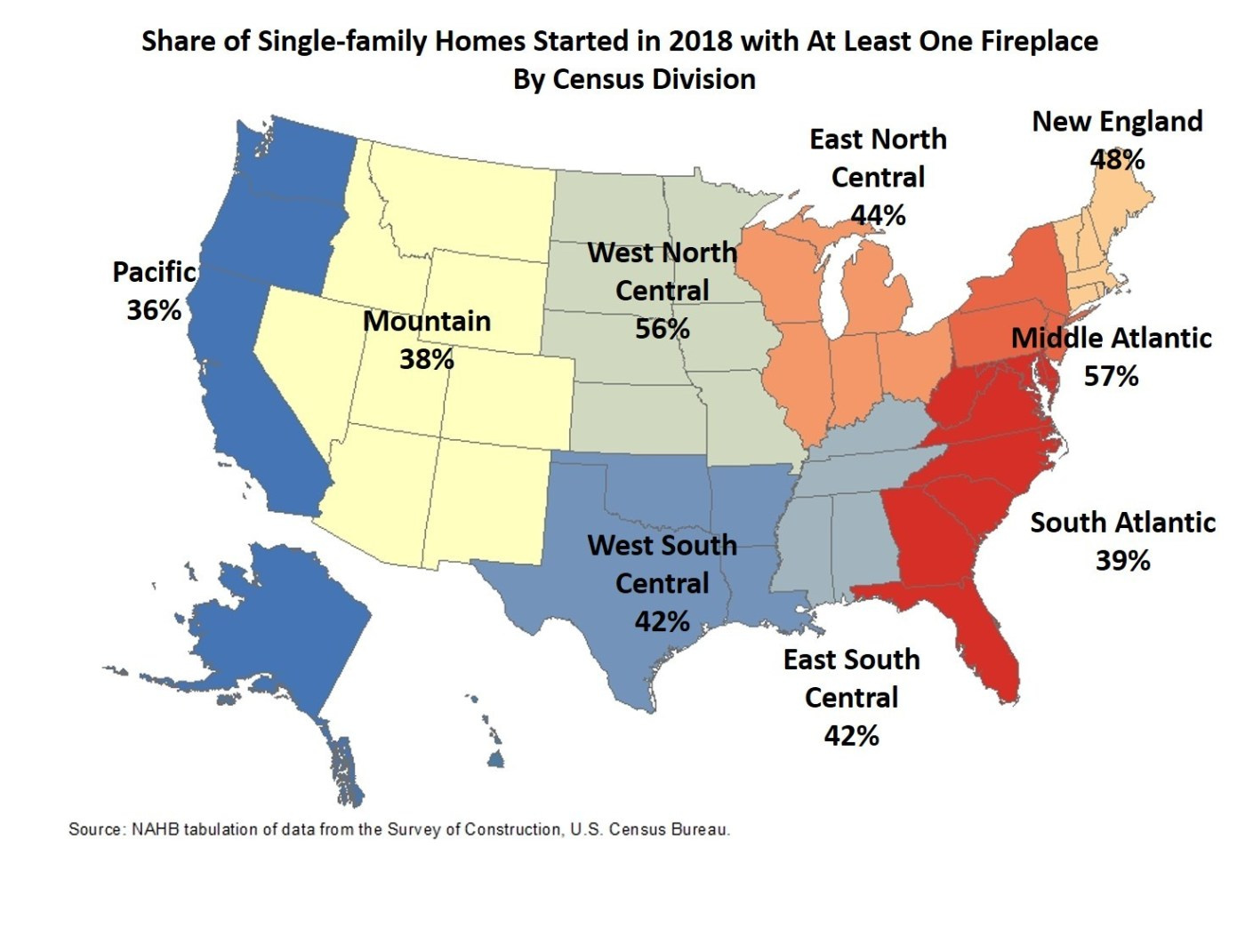
Fewer new homes are being built with a fireplace, a sign the cold-weather amenity is falling out of favor with home buyers. A record low percentage of newly constructed single-family homes—41%—last year included a fireplace, according to an analysis of U.S. Census Bureau data from the National Association of Home Builders. The share of single-family homes with fireplaces has been declining since 2015, the NAHB reports.

“An obvious explanation for the declining trend is that builders are foregoing fireplaces in some of their homes so they can bring them in at prices their customers can afford,” the NAHB reports on its Eye on Housing blog. “Keeping new homes affordable has become a considerable challenge lately.”

Fireplaces are usually considered a desirable amenity but not a must-have, the NAHB notes. Fifty-five percent of buyers rate gas-burning fireplaces as desirable, while 48% say the same of wood-burning fireplaces as desirable, according to the survey. That places such features in the middle of the list of decorative features most sought-after in terms of desirability, according to the NAHB’s “What Home Buyers Really Want” survey. However, only 16% of buyers say either type of fireplace is essential in a home purchase.

Fireplaces are the most uncommon home feature in the lower price points of the market. For example, just 7% of new single-family homes started in 2018 that were priced under $150,000 had fireplaces. On the other hand, more than 60% of homes priced at $500,000 or above had a fireplace.

Source: “Share of New Homes With Fireplaces Drop to Record Low,” National Association of Home Builders’ Eye on Housing blog (9/16/19)

6 Lessons Monopoly Can Teach About Home Buying

  1. Patience

MONOPOLY: So your family has decided to play Monopoly? Refill your beverage, grab a snack and change into comfortable clothes. You’re going to be there a while.

LESSON: Buying real estate is a process. There’s pre-approval for a loan, interviewing agents, searching for homes, submitting an offer, maybe submitting another offer, the home inspection, the appraisal, and final loan processing before you get the keys. Needless to say, buying a home can take some time. Instead of getting frustrated, focus on all of the great reasons you decided buying a home was right for you. Staying in close communication with your agent throughout the process will help, too.

  1. Neighborhood matters

MONOPOLY: Everyone starts the game with one corner in mind: Boardwalk and Park Place. The high-priced properties have the best returns on investments, and the players who snag them first tend to do well in the game.

LESSON: Location is often a major consideration in real life as well. Home values, your lifestyle and so much more are factors in your neighborhood choice. Work with your agent to learn all you can about the neighborhoods that pique your interest.

  1. Keep an open mind

MONOPOLY: Baltic and Mediterranean Avenue have a bad reputation because they’re the cheapest properties on the board, but they also present opportunity. Add a few houses and hotels and your return could be bigger than the one on nearby Connecticut Avenue.

LESSON: Keep an open mind when shopping for a home. An up-and-coming neighborhood may have appeal you didn’t see before, and more value for your budget.

  1. Be prepared

MONOPOLY: You’re a Monopoly mogul! You have a handful of desirable properties and a steady stream of income from your houses and hotels. Then comes the Chance card: “Make general repairs on your property – for each house pay $25, for each hotel pay $100.”

LESSON: You never know what card you’re going to draw. But unlike Monopoly, the real world has home insurance available to help you prepare for unexpected repairs and disasters. A variety of plans, customizable to any budget, are available. Some homebuyers also opt for warranties covering potential appliance issues after move-in.

  1. How to win a bidding war

MONOPOLY: Trading properties keeps Monopoly exciting. And there are no strict rules as to how a seller determines to accept an offer. Sibling rivalry, bribes involving candy or even business sense can play into a player’s decision.

LESSON: Sellers don’t always accept the highest offer. Writing a letter about why you fell in love with their home can sometimes sway their decision in your favor.

  1. The importance of strategy

MONOPOLY: Monopoly is a game of strategy, but few players are inclined to study ways to win. What if you had a coach sitting next to you, advising how much to bid for a property, where to look next, and whether or not mortgaging a utility to buy Boardwalk is a smart idea? You would be unstoppable!

LESSON: Buying a home is an infrequent occurrence; for some it happens only once in a lifetime. Wouldn’t it be helpful to have someone on your side that is up-to-speed on laws for your state, knows which neighborhoods would best fit your lifestyle and helps you navigate a bidding war? That’s the value an experienced agent provides.

2019 Real Estate in a Digital Age

Did you know that the three most popular information sources home buyers used in the home search were:

  • Online website (93%)
  • Real estate agent (86%)
  • Mobile/tablet website or app (73%)

Outdoor Kitchens Continue to Be Major Draw

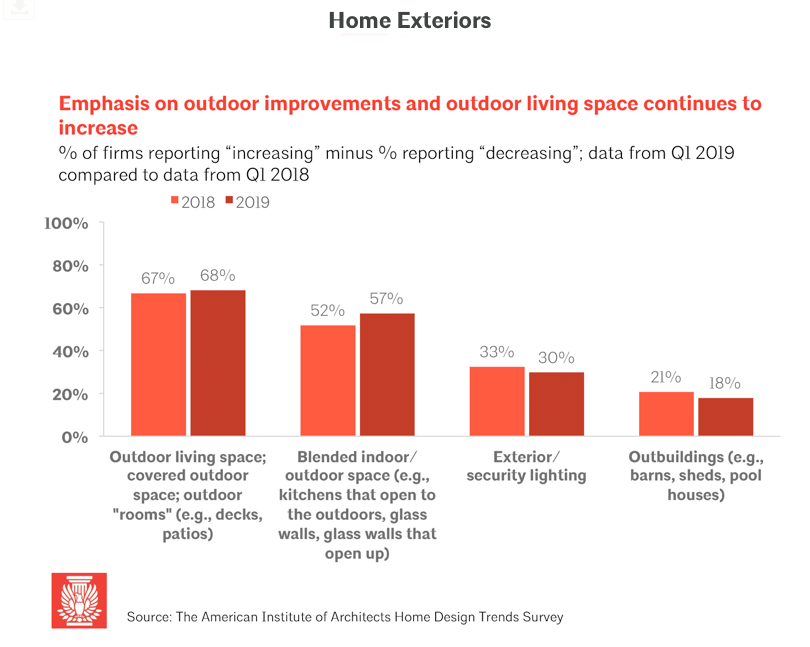
The appeal of outdoor living continues to be important to homeowners, and the outdoor kitchen is at the center of that. The latest American Institute of Architects Home Design Trends Survey shows that outdoor kitchens are among the most wanted kitchen features in new architectural projects.

Nearly 50% of the architect respondents surveyed reported the popularity of outdoor kitchens is still growing. The popularity is seen in markets across the country, and not just in warmer climates like Florida, Texas, and California—outdoor kitchens are also taking hold in colder areas like the Northeast.

Read more in REALTOR® Magazine…

What the Fed’s Rate Cut Means for Buyers

The Federal Reserve recently cut interest rates for the first time since the Great Recession took hold in 2008, though the move is not likely to deliver significant juice to an already favorable borrowing environment for home buyers. The federal funds rate, which is what banks charge one another for short-term borrowing, will now hover between 2% and 2.25%, according to news reports.

The Fed says its decision to lower interest rates, which comes after months of pressure from President Donald Trump, is designed to stave off the threat of an economic downturn. But it’s unlikely to translate into additional mortgage savings for many buyers. With the interest rate for a 30-year loan already hovering below 4%, the Fed’s move may be more meaningful for buyers with other types of financing, says Lawrence Yun, chief economist for the National Association of REALTORS®. “Many borrowers will benefit, especially those with adjustable-rate mortgages and commercial real estate loans,” Yun says. “The longer-term 30-year fixed-rate mortgages will see little change in the near future because they had already declined in anticipation of this latest move by the Fed.

“These low interest rates will partly help with housing affordability over the short-term. Both rents and home prices have been consistently outpacing income growth. The only way to mitigate housing-cost challenges as a long-term solution is to bring more supply of both multifamily and single-family homes to the market,” adds Yun.

Still, lower borrowing costs are helping buyers manage rising home prices. For example, buyers who spend $1,500 on monthly mortgage payments can afford to purchase a $402,500 home this year compared to $367,500 last year, when mortgage rates averaged 4.57%, according to realtor.com®. “Last year, buyers would have needed an additional $145 a month on top of the $1,500 to afford a $402,500 home,” says Danielle Hale, realtor.com®’s chief economist.

In some locales, buyers’ money can stretch even further. “An extra $35,000 in purchasing power, depending on where you are in the country, can really make a difference to buyers today,” Hale says. “It still counts, even with home prices up 6% nationally. That increase in purchase power is greater than the national price increase.”

Source: REALTOR® Magazine

Housing Options Expand in King County

King County residents will have more options for owning a home thanks to a new law championed by REALTORS®. As Seattle and King County continue to experience greater demand for housing and an uptick in home prices, a coalition of housing advocates worked with the Legislature to pass a condominium reform measure that will make condo construction more attractive across the state.

The result: More housing choices for more people in King County.

Read more…

How Cash-Strapped Consumers Can Become Homeowners and Build Equity

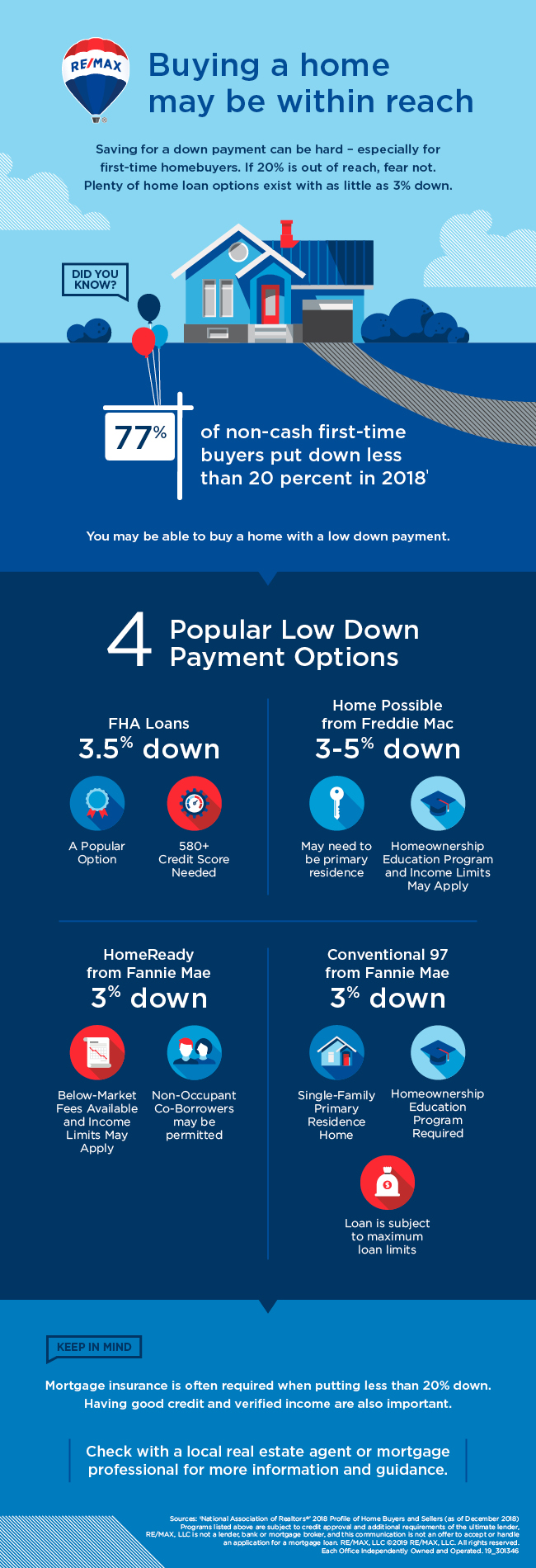
Anyone who has saved for a down payment for a home knows it’s tough — especially for first-time homebuyers. In 2018, the National Association of Realtors (NAR) found that 13 percent of first-time homebuyers said the most difficult step in the homebuying process was saving for a down payment.

It’s a misconception that a 20-percent down payment is required for a home purchase, when in reality, many home loan options exist that may be able to put consumers into a home for as little as three percent down. In fact, 77 percent of non-cash first-time homebuyers in 2018 purchased a property using a down payment of less than 20 percent. Buying a home may be within reach — RE/MAX and Motto Mortgage put together a list of the most popular loan options for first-time buyers.

Agents Report Sharp Declines in Bidding Wars

There will likely be less competition for home buyers this spring—a widely reported index from Redfin shows a significant decrease among real estate professionals reporting bidding wars in March, compared to a year ago. Only 16 percent of offers written by Redfin agents on behalf of their customers in the first three weeks of March faced a bidding war, down from 61 percent a year ago, according to the brokerage’s index.

San Francisco, Boston, San Diego, and Portland, Ore., are the most competitive housing markets this month, according to the report. However, even in these markets, only one in five buyers faced bidding wars; a year ago, real estate agents in these markets reported that 65 percent of their buyers’ offers faced multiple bids.

Read the full article on REALTOR® Magazine…

House hunting pet owners place high priority on spaces for pets

Real estate brokers are keenly aware of the priority home buyers and home owners give to their pets.

Recent Realtor.com research showed 89 percent of millennials who bought a home own a pet. Of this demographic, 79 percent of pet-owning buyers who closed on a property said they would pass up an otherwise perfect home if it didn’t meet the needs of their pets.

A recent pet parent who purchased a home said she even picked her Realtor® for her pet-friendly attitude, having learned the broker she chose had worked with several volunteers at a local animal shelter.

“It’s heartwarming to find that people will put their pets’ needs first, even when it comes to one of the biggest financial decisions they will ever make,” says Nate Johnson, chief marketing officer for realtor.com. “This survey shows that we really do consider pets part of the family-and that their needs are a critical part of finding the perfect home.”

While dog owners typically desire homes with large yards, cat owners have different space considerations, ranging from where to place to litter box to find ways to satisfy the feline’s curiosity and craving for exercise and environmental enrichment.

Cat owners on the move face an “indoor/outdoor” dilemma, according to Cynthia Chomos, who teaches classes for real estate brokers on various topics including “feng shui for buying and selling” and “color appeal for a quicker sale.” A few years ago, she started applying those skills to her other passion: creating safe, enriching outdoor enclosures for cats, sometimes known as catios or cat patios.

“Cats, whether living mostly indoors or allowed outside, are naturally drawn to the stimulation of the outdoors, but responsible cat owners know a variety of outdoor hazards lurk, especially for free-roaming cats,” according to Chomos. Veterinarians can confirm the consequences of unprotected outdoor time can be traumatic and expensive.

Having a safe and stimulating environment for beloved pets is paramount, but home buyers who search for pet-specific amenities also care about aesthetics.

“You can have a beautiful house and a pet, too,” says Julia Szabo, pet columnist for the New York Post and author of Animal House Style: Designing A Home To Share With Your Pets.

Chomos, who founded Catio Spaces in 2014 and is a licensed contractor, agreed, stating, “Rather than looking like an unsightly cage, catios can resemble outdoor rooms. She builds custom catios around Puget Sound and offers downloadable plans for DIYers who prefer to construct their own or hire their own carpenter.

Cat enclosures and protected perches come in a variety of shapes, sizes and styles. (Editor’s note: a Google search uncovered more than 4 million results for the keyword catio!)  PETA describes catios as being akin to “a vacation beach house for your feline friends.”

Escape-proof materials and components are essential, according to those who build them. Additional elements often include shelves for vertical and horizontal movement, perches for lounging, toys for enrichment, cat safe plants, seating and space to decorate.

From small and simple to large and luxurious, the enclosures can be an attractive addition to a home while ensuring the health and wellbeing of cats – as well as cat owners, birds, and other wildlife. Large catios provide outdoor space for feline and human bonding while enjoying the benefits of nature.

As a pet lifestyle expert, Chomos helped found “Catio Tour Seattle,” a showcase of local catios, and collaborates with others to promote the benefits of catios. The annual catio tour, is organized by PAWS as part of its Safe Cats, Healthy Habitats project and sponsored by Catio Spaces, The Humane Society of the United States, Oskar & Klaus and Seattle Audubon. This year’s event is scheduled for Saturday, July 13.

Source: Seattle King County REALTORS® Northwest REporter
How Will the Housing Market Fare This Spring?

Real estate pros often anxiously await for the spring selling season, a time known for an uptick in home sales. But will spring be as hot for the housing market this year as it has been in the past?

Since the end of last year, home sales have slowed (a decline of 10 percent in December compared to a year prior), and properties have been sitting on the market for longer (46 days compared to 30 days a year ago).

Nevertheless, Lawrence Yun, chief economist at the National Association of REALTORS®, says that “multiple data show definitively improving conditions” heading into the spring selling and buying season.

Consumer sentiment about home buying is turning more upbeat, and there have been greater reports of foot traffic at open houses, according to recent NAR surveys. The number of openings of lock boxes—which real estate pros use to access a key prior to unlocking a home for a showing—is “measurably higher” in January and February compared to the second half of 2018, according to NAR SentriLock data.

Further, the number of consumers applying for a mortgage to purchase a home is on the rise. “After the weak conditions of late last year, mortgage applications have picked up notably in 2019 with more consumers evidently searching for a home compared to one year ago,” Yun writes in his latest real estate column at Forbes.com. Also, contract signings to purchase a home rose 4.6 percent in January—another healthy sign about the market Yun points to.

With mortgage rates staying low, Yun expects more home buyers and sellers this spring. So far this year, the 30-year fixed-rate mortgage has fallen to under a 4.5 percent average. That means a typical home buyer could save nearly $100 per month due to the drop. In addition, wages are up 3.4 percent year-over-year on average, the hightest rate in a decade, .

“The slump is over” in the housing market, Yun notes. “Better times are ahead for home buyers.”

Source: REALTOR® Magazine