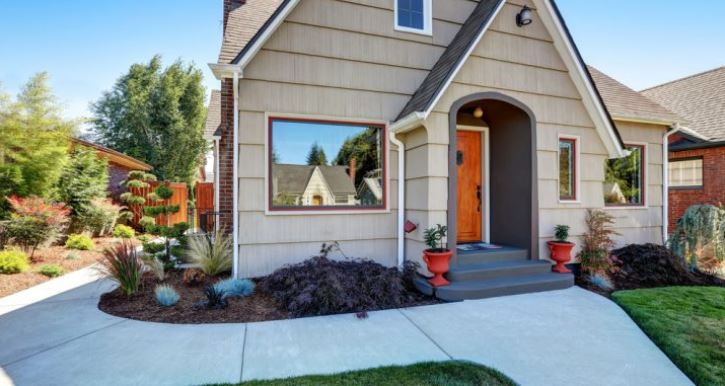
6712 92nd St E, Puyallup, WA 98371

$324,900

3 bedrooms; 1.75 bathrooms; 1,354 square feet

You will love this bright & open floor plan with vaulted ceilings! The home is well maintained with all newer appliances that stay, as well as a gas furnace & water heater. Everything except the washer was replaced w/in the last 2 yrs. You’ll appreciate the laminate floor, rounded corners, molding, gas fireplace, skylights, large walk-in master closet, utility rm w/sink, sprinklers, shed and partial valley/mountain range views. Relax on the front porch & enjoy the large conveniently located lot!

Flyer

Virtual Tour

Sold 10/19/18 for $324,900

Fewer Americans Are Willing to Move for a Job

Fewer Americans are willing to uproot their lives to move for new job opportunities, suggests new census data.

About 3.5 million Americans relocated for a new job last year, a 10 percent drop from 3.8 million in 2015. The number has been trending lower, despite the overall population increasing 20 percent over that time, The Wall Street Journal reports.

Why are more people staying put? Experts told WSJ that some blame may rest on rebounding real estate values. Housing costs have soared higher in some regions where jobs may be more plentiful, like East and West Coast cities, but it may be pricing out some who may have otherwise been willing to relocate.

Read the full article on REALTORmagazine

8 Affordable Ways To Boost A Home’s Curb Appeal


Your home’s curb appeal could be make or break for the amount of showings you have. In the same way curb appeal can attract potential buyers through your door, a less than spectacular home front can also be a detractor. From upgrading landscaping to refreshing paint, consider these eight affordable ways to boost your home’s curb appeal and entice buyers to add your home to their “must see” list:

  • Update Outdoor Lighting

An easy way to instantly add interest and depth to an outdoor space is to replace dated lighting fixtures with new ones. There are many lighting options on the market in a wide range of colors and styles. Most choices are quite affordable and you will be amazed at what a few dollars can do in upgrading the overall look of your outdoor space.

  • Keep It Mowed

A freshly mowed lawn is essential to boosting your curb appeal when trying to sell your home. Mowing your lawn on a weekly or 10 day basis will allow it to grow enough between mows so that you don’t damage the grass. Make sure to also allow time for edging and clear away any clippings before your house is shown to potential buyers. Keeping your lawn in top condition is always a good idea to boost curb appeal.

  • Fix The Small Things

Do a thorough look through your front porch to find any small issues that have gone unnoticed for years. Fix small things like a slit in the window screen, tightening the mailbox, or replacing a burned out lightbulb. Attending to these small things can add up when it comes to receiving an offer for your home.

  • Add Some Flowers

Pick up a few beautiful sets of flowers from the garden center and plant them in a pot next to the front door. Colorful flowers will add instant beauty to the space and welcome guests into your home. Consider adding a few different colors to help create an interesting and inviting atmosphere.

  • Trim Up Shrubs

Get out your shears and trim up bushes and plants that have overgrown their spaces. All you need is a little bit of elbow grease to freshen up your landscaping. Trim bushes into eye pleasing shapes with rounded edges and give every plant in your garden enough room to shine while still being a part of the overall landscaping picture.

  • Touch Up Paint

You most likely have a can of leftover paint in the garage or basement. Use this to touch up areas of your house that could use a fresh coat of paint. Consider items like the mailbox, house numbers, or plant pots that have seen a few years since their last painting. If your front door needs some help consider painting it to add a fresh look to your home.

  • Power Wash It

You will be amazed by the amount of dirt a good power washing can lift from your home. Renting a power washer for a day is also a good and affordable way to add curb appeal to your home. Another affordable option is to consider borrowing one from a friend to save on expenses. Pay close attention to the outside of your home as well as gutters, patios, walkways, and patio furniture.

  • Add Some Mulch

Picking up a few bags of mulch at a garden center is a great way to add instant curb appeal to your landscaping. Mulch not only looks great but it also provides essential help to plants by helping to retain water as well as keeping weeds at bay. Simply add a few inches of mulch around trees and garden beds to instantly raise the overall look of your home.

There are many ways that you can instantly increase your home’s curb appeal without breaking the bank. Consider ways that you can help your home for little to no cost. Doing any of the above tips can help boost your home’s resale value.

July 2018 RE/MAX National Housing Report

Sales Increase Nearly 2%, Despite Record Prices, Sinking Inventory

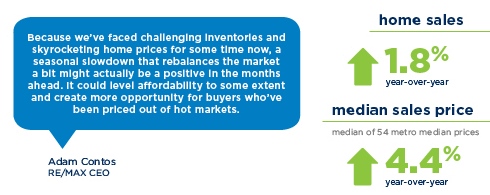
July home sales rose 1.8% year-over-year, making it the second month of 2018 to post a sales increase year-over-year, according to the RE/MAX National Housing Report.

In the July 2018 report, 37 of the report’s 54 metro areas posted sales increases over July 2017—April was the first month of 2018 where more homes were sold than the same month in 2017. The report also marks the 28th consecutive month of year-over-year price increases.

The Median Sales Price of $250,575 was up 4.4% from July 2017, and represents the third-highest price in report history—topped only by May and June of this year. Months Supply of Inventory was at 2.9 – the smallest total ever recorded for July.

Forty-two of the 54 metro areas reported a year-over-year drop in inventory. The Days on Market dropped to 41 – four days less than July 2017 and one day under the previous nine-year low set in June 2018.

“Because we’ve faced challenging inventories and increasing home prices for some time now, a seasonal slowdown that rebalances the market a bit might actually be a positive in the months ahead,” said RE/MAX CEO Adam Contos. “It could level affordability to some extent and create more opportunity for buyers who’ve been priced out of hot markets.”

Read the full article in RE/MAX’s newsroom

Watch the 40 second summary video on YouTube

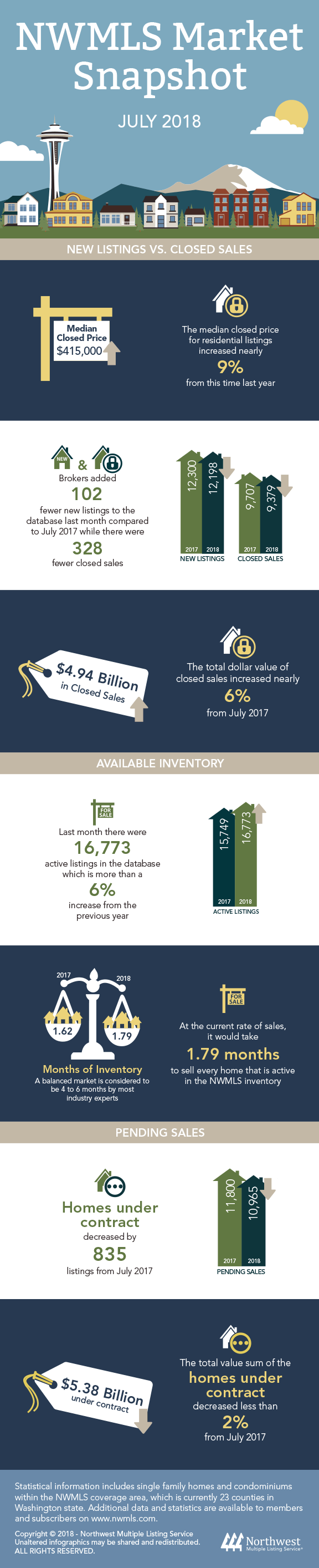
Washington State NWMLS Market Snapshot for July 2018

31003 14th Ave S #H-12, Federal Way, WA 98003

$134,900

2 bedrooms; 1 bathroom; 780 square feet

Don’t miss this bright, move-in ready top floor condo! Enjoy newer paint & carpet thru-out the open floor plan. You’ll appreciate the carport, as well as other parking. This beautiful & well maintained lakeside community has a clubhouse, gazebo, pool, hot tub, sauna & exercise room. Enjoy sunsets & geese on peaceful Easter Lake from the gazebo or clubhouse. Near stores, restaurants & main bus line. Ideal for investors with no rental cap, but you may love this community & not want to leave!

Flyer

Virtual Tour

Sold 1/22/19

No Housing Recession Over the Horizon

Media reports are increasingly focused on whether a major home sale slowdown, or maybe even a crash, is in the making, in part because many hot housing markets are seeing slackening buyer demand, and nationally 2018 is expected to end with fewer home sales than 2017. But the possibility of a crash is unlikely, says Lawrence Yun, chief economist for the National Association of REALTORS®.

In a piece he contributed to Forbes, Yun says hot markets are seeing a slowdown not because of weak buyer demand, which could be an indicator of a true slowdown, but insufficient supply. When homes come on the market, especially in areas like Seattle and Denver that have strong job growth and little unemployment, they are typically snapped up.

In other positive signs, home price growth remains strong in markets across the country—about 5 percent on a nationwide basis so far this year—and there are no signs of the credit excesses that characterized the housing crisis 10 years ago. “Lending standards today are still stringent, as evidenced by the higher-than-normal credit scores of those who are able to obtain a mortgage,” Yun says. “That is why mortgage default and foreclosure rates are at historic lows.”

In short, Yun says, today’s housing problem stems from insufficient inventory. The supply problem is driving up home prices and worsening affordability and keeping sales from matching demand. That is a serious problem and the answer is to encourage builders to increase supply, Yun says, but it is not a prelude to a crash.

Source: “No Housing Recession Over Horizon,” Forbes.com

Why Buying a Home Is Becoming More Urgent

If your clients are wavering on whether to buy a home, there are several reasons they may want to get more serious about their real estate search, according to MagnifyMoney, a personal finance website. Most importantly, mortgage rates remain historically low—but that isn’t expected to last. They’ve been rising steadily, but rates for the current 30-year fixed-rate mortgage are still well below 5 percent, compared to nearly 19 percent In 1981. “The housing market has been on pretty solid footing now for a number of years, and a lot of that is due to pretty affordable mortgage rates,” says Stijn Van Nieuwerburgh, a real estate professor at Columbia Business School. In a recent Reuters poll, 45 housing analysts predict that by the end of 2019, the average rate for the 30-year fixed-rate mortgage likely will be above 5 percent. So buyers who lock in a rate this year likely will have lower borrowing costs.

Also, escalating home prices aren’t expected to let up anytime soon. According to the Reuters poll, home values in the 20 largest metro areas are expected to increase by another 5.7 percent before the end of the year. The National Association of REALTORS® predicts growth in home prices to continue in the coming years, but year-over-year growth likely will slow to 3 percent or 5 percent. “Homeownership is long-term prospect,” says Paul Bishop, NAR’s vice president of research. “So as long as prices continue to increase at even a modest pace over the next four, five, eight, 10 years, then that equity does build up, in some cases, to quite a substantial part of someone’s net worth.”

Home shoppers who are holding out for more inventory may need to accept that the waiting game likely won’t be successful. At the end of May, there were 1.85 million existing homes for sale, including single-family homes, condos, townhomes, and co-ops. That is 6.1 percent lower than a year ago, according to NAR. Construction is on the rise but new developments are only accounting for about 2 percent of the market, says Van Nieuwerburgh, adding that “we’re not building enough to alleviate those shortages.”

While there are plenty of reasons why buying makes sense now, housing analysts are quick to point out that consumers shouldn’t take the plunge if they’re not ready financially or personally for the commitment. Prospective buyers need to consider financial security, their location, and their job situation, says Bishop. “Ultimately, you need to ask yourself: Are you likely to be in a particular location long enough that homeownership makes sense?” he says.

Source: MagnifyMoney

Has the Inventory Crunch Begun to Subside?

Contract signings rose in all four major regions across the U.S. last month, a sign that dwindling home sales—which have plagued the market at an unusual time of year this summer—will reverse course in the coming months, the National Association of REALTORS® reports.

NAR’s Pending Home Sales Index, a forward-looking indicator based on contract signings, increased 0.9 percent month over month in June to a reading of 106.9. “After two straight months of declines in pending home sales, home shoppers in a majority of markets had a little more success finding a home to buy last month,” says NAR Chief Economist Lawrence Yun. “The positive forces of faster economic growth and steady hiring are being met by the negative forces of higher home prices and mortgage rates. Even with slightly more homeowners putting their home on the market, inventory is still subpar and not meeting demand. As a result, affordability constraints are pricing out some would-be buyers and keeping overall sales activity below last year’s pace.”

Despite last month’s rise, contract signings are still down 2.5 percent compared to a year ago, NAR reports. Nevertheless, Yun says the worst of the supply crunch may now have passed. In June, existing inventory was up slightly on an annual basis, marking the first increase in three years. Several large metros saw year-over-year surges in inventory levels last month:

  • Portland, Ore.: +24 percent
  • Providence, R.I.: +20 percent
  • Seattle: +19 percent
  • Nashville, Tenn.: +17 percent
  • San Jose, Calif.: +15 percent

“Home price growth remains swift, and listings are still going under contract at a robust pace in most of the country, which indicates that even with rising inventory in many markets, demand still significantly outpaces what’s available for sale,” Yun says. “However, if this trend of increasing supply continues in the months ahead, prospective buyers will hopefully begin to see more choices and softer price growth.”

Source: National Association of REALTORS®

‘Fair’ vs. ‘Very Good’ Credit: The Impact on Mortgages

Consumers who make efforts to raise their credit scores from “fair” to “very good” may see big payoffs. LendingTree researchers analyzed loan request and average loan balance data to see how a lower credit score can increase borrowing costs for the average consumer. They compared the impact across several types of debt: mortgages, student loans, auto loans, personal loans, and credit cards.

Overall, raising a credit score from “fair” (580-669) to “very good” (740-799) can save a consumer $45,283 on their debt. That’s the average in extra interest on all debt that consumers will pay when they have a credit score ranked as fair. Mortgage costs can account for 63 percent of those potential savings. By raising a credit score from fair to very good, consumers could save $29,106 in mortgage costs, the study shows.

Read more…