Smell Something? 7 Ways to Oust Odors

oust-odors

Whether you’re preparing for an open house or simply trying to freshen up your home, try these suggestions for getting rid of odors from seven commonly smelly items.

  1. Trash cans

After rinsing out a stinky garbage can with soap and water, stash a few scented laundry dryer sheets at the bottom to absorb odor.

  1. Freezers

An old (clean) sock stuffed with coffee grounds can absorb the musty smell in your freezer. Coffee socks can also help de-mustify stale closets. Tie one to a hanger.

  1. Litter Box

Extremely porous activated charcoal is a big-time odor absorber. Pet stores sell versions made especially for pet odors. Keep it near the litter box.

  1. Carpet

When your carpet smells icky, try sprinkling baking soda. Let it sit for half an hour, then vacuum it up.

  1. Dishwasher

Who wants to use a dishwasher that never smells quite clean? Pour white vinegar into a dishwasher safe cup and stick it in the top rack. Run the machine through its cycle. Though your kitchen will smell like vinegar for a bit, the inside of your dishwasher will soon be odor-free.

  1. Basement

If a dehumidifier doesn’t help, try adding a dozen drops of tea tree oil to a spray bottle of water and blasting the basement with this natural fungicide.

  1. Refrigerator

Clear out smell by wiping down the wall with hydrogen peroxide.

Making sure your home smells fresh is just one of the critical things to do before an open house. I’ll be happy to suggest other important steps; contact me today!

3 Crucial Reasons You Should Buy a Home Before 2017 Ends

sign-close-up-2

Buying a house in 2017 will feel kind of like you’ve jumped onto the subway just as the doors were closing. Your heart’s pounding and you’re winded from the race, but you made it—just in time.

OK, so maybe that’s a little exaggerated. But here’s the thing: Interest rates have begun to rise and will likely climb higher. Inventory is low and could shrink more. And home prices? Well, home prices are increasing—and they’re not predicted to fall any time soon.

If you don’t jump aboard the real estate train now, you might be too late.

Read more on realtor.com®…

Sold Out: These 10 U.S. Cities Have the Biggest Housing Shortages

top-10-markets-feeling-the-crunch

It’s a parched, scorching desert out there for many U.S. home buyers. For the past 28 months, the housing market has been defined not just by demand—which remains sky-high in many parts of the nation—but also by the shrinking number of available homes for sale. So what are the signposts of a tighter-than-tight marketplace? Buyers are jumping on realtor.com® listings within seconds of their initial postings. Wanna-be homeowners are burrowing themselves into ever-scarcer, ever-busier open houses and going a little mad trying to get in the first bid. Real estate agents are knocking on hundreds of doors just to squeeze out one more listing.

And who are the biggest losers in such a skintight, depleted market? First-time buyers with limited budgets, of course.

Read the article on realtor.com® and see where Seattle ranks…

More Buyers and Sellers Think RE/MAX

most-thought-of-national-brand

Brand awareness matters. It determines what neighbors recommend to one another, the name consumers enter into search engines, and who people trust as their guide when making big life decisions – such as buying or selling a home. Which is why when a study shows RE/MAX is the real estate brand that comes to mind most, it’s a big deal.

Brand power – just part of the full package of experience and service RE/MAX agents bring to the table.

Contact Jennifer to put the RE/MAX brand power to work for you!

8 Tips for Keeping Out Rodents This Winter

rodents

As the days grow chillier, rodents have even more reason to try to move into your home. They don’t just gnaw holes into walls and floors and destroy wiring, they can also bring in germs and disease. Follow these tips to help keep them out.

1. Prevention is the best defense

Don’t keep favorite rodent hangouts like trash cans, firewood and piles of junk close to your home.

2. Fill the gaps

Find out where the buggers have been getting in and stuff the holes with steel wool or aluminum foil – both stand up against mouse teeth. Make sure to seal up both the inside and outside of your home.

3. Someone “hoo” can help

Put up an owl box in your yard to attract owls, who snack on mice.

4. Use Scent

Certain smells convince critters you have an army of predators guarding your house. Try sprinkling ammonia (smells like predator urine), used kitty litter or snake poop. (Yes, you can buy Python Poo online for $15) around your yard.

5. Minty fresh defense

Douse cotton balls with 100 percent peppermint oil and put them in the back of cabinets, behind the fridge and other places mice hang out. Replace the cotton balls at least once a month.

6. Dryer sheets

Mice loathe the smell of fabric softener sheets. Leave one or two in their favorite spots.

7. Adopt a hunter

Your local animal shelter is sure to have a cat who would help with critter removal in exchange for a good home.

8. Ultrasonic power

Ultrasonic rodent repellers drive mice away with sound waves. The sound bothers cats and dogs, too, so don’t use them if you have furry family members.

Ready to market your home now that the mice are gone? Contact me; I’ll be happy to help!

Don’t Let Referrals Slip By

referralexchange

Referrals can be a big source of a real estate agent’s business and can be key to keeping your business flowing year-round.

About 40 percent of the real estate agents recently surveyed by the ReferralExchange and the Council of Residential Specialists say they receive about one to five referrals per year. Another 20 percent say they receive six to 10.

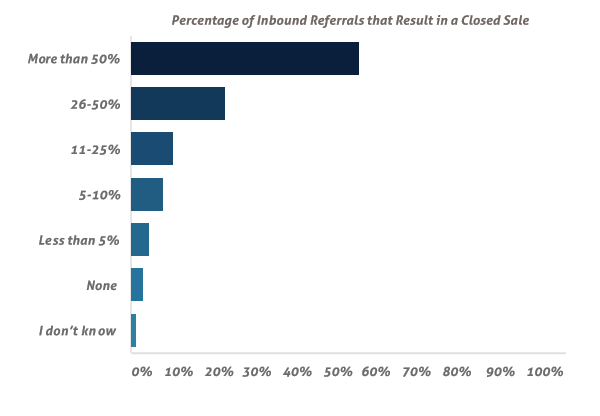
Inbound referrals tend to result in a closed transaction the most. The highest rate of success in closing a transaction is when a referral came from the agent’s own sphere of clients, according to the real estate professionals surveyed. The next best referrals came from referral sources like their brokerages and corporate referral sites.

More than 40 percent of survey respondents reported that more half the referrals they send out result in a closed sale. Another 20 percent estimated that they see a quarter to half of their outbound referrals close.

The main factors that determine whether a referral will close include the seriousness of the client about buying and selling; their connection to the person who referred them; and whether they trust the person or system who referred them.

“The greater the connection to the source, the more likely the referral is serious and will lead to a closed sale,” the study notes.

The majority of the inbound referrals real estate professionals say they receive come from their sphere (40 percent) and from other real estate professionals (37 percent). Nearly 90 percent of the referrals that come from a real estate professional’s sphere come from current and past clients; another 10 percent come from friends and family. An additional 22 percent of referrals come from various sources, such as corporate referral sites and the agent’s own brokerage.

“This data reiterates the value of vetting,” the study notes. “Whether referrals are qualified by the agent’s personal sphere or another trusted source — yes, even one on the internet — true referrals have legs. Relationships and human connections matter, certainly more than the slot machine that is Internet lead generation.”

Source: REALTOR® Magazine

Open Floor Plan Still Popular

Front Door

Open floor plans continue to reign. Eighty-four percent of builders say that in the typical single-family home they build, the kitchen and family room arrangement is at least partially open. Fifty-four percent say it’s completely open, according to responses from a September 2016 National Association of Home Builders/Wells Fargo Housing Market Index.

“Completely open” essentially means the two areas are combined into the same room. Partially open signifies areas separated by a partial wall, arch, counter, or something less than a full wall.

Seventy percent of recent and prospective home buyers say they prefer a home with either a completely or partially open kitchen-family room arrangement; 32 percent say they prefer the arrangement completely open, according to an NAHB survey.

Only 16 percent of buyers say they want the kitchen and family rooms in separate areas of the house.

As demand continues to increase for open floor plans, homeowners of existing-homes are also looking to open up their kitchen and family room areas. Professional remodelers report that 40 percent of their projects involved making the floor plan more open by removing interior walls, pillars, arches, etc., according to first quarter of 2016 data in the Remodeling Market Index.

Source: “Builders Satisfy Demand for Open Floor Plans,” National Association of Home Builders’ Eye on Housing blog

January 2017 RE/MAX National Housing Report

january-nhr

U.S. Home Sales Finish Strong in 2016

Capped off by a strong December, 2016 was the best year for U.S. home sales since the recession, according to the January 2017 RE/MAX National Housing Report. Home sales in 2016 were the highest in the housing report’s eight-year history, topping the sales of 2015, the previously strongest year. Nine months of 2016 posted sales greater than in the same months of 2015.

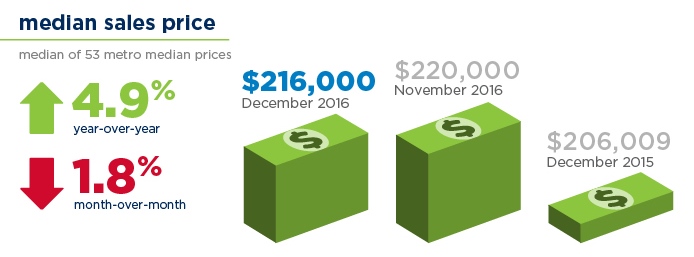
According to the 53-market report, the trend of rising prices and shrinking inventory continued in December, even though December was one of the three months that trailed 2015, with sales 1.8% below December 2015. Even so, nearly half of the markets reported increased sales over December 2015, and almost two-thirds saw sales higher than November 2016. The median increase over November 2016 was 1.7%.

The median sales price of $216,000 was 4.9% above one year ago and only 1.8% below November’s.

Read the full article in RE/MAX’s Newsroom…

Watch the short video on YouTube…

Small-Cost, Big-Impact Updates for Your Home

updates-for-your-home

Consider making some of the following updates before listing your home. It could add to your confidence when putting your home on the market, and possibly bump up the sale price as well.

  1. Do a walk-through of your home

Visit each room and make a checklist of items that need to be repaired or replaced – and be objective while doing so. Keep an eye out for outdated styles, bold patterns and colors, dated fixtures, unfinished projects, and over-cluttered closets and cabinets – these items all need to be considered to showcase your home in the best light possible. After making your checklist, develop a budget and establish dates on your calendar to complete these tasks.

  1. Incorporate today’s styles and trends

Our homes and our styles are as individualized as we are. So although you may love an ultramodern or country cottage look, the majority of buyers may not. Choose transitional styles if you need to replace your lighting, hardware, appliances or flooring. And don’t be afraid to ask your local suppliers for help during the selection process.

  1. Remember: First impressions count

It takes just 15 seconds to grab the hearts of potential buyers – or leave them completely unimpressed. Make those 15 seconds count! Fresh sealant on a driveway, vibrant and healthy plants on the front porch, a clean rug and a nice fragrance in the entryway, clutter-free hallways – these all make a huge impact but require little effort.

  1. Focus on the kitchen and baths

Kitchens and bathrooms are some of the most frequently used areas of any home, so put in some extra effort to freshen them up! Things like stained shower stalls and toilets, broken grout, leaky faucets or dated cabinet hardware are easily replaced at little cost. Or, instead of replacing tubs or shower stalls, consider having them professionally resprayed for a fresh new look. A small investment goes a long way in these spaces. And when it comes to hardware and supplies for kitchens and baths, consider shopping online. Many online suppliers don’t have a middleman in the process, so they can sell their items for much less than local hardware retailers.

  1. Let’s talk paint

Paint is a minimal investment, especially if you have the skills to do the painting yourself. From walls to doors to cabinets to fixtures (and even tile), paint can drastically transform spaces. Keep your selections neutral and universally pleasing. Cover bold colors with neutral ones, making the home move-in ready.

Here’s a checklist for small investments with big impacts:

  • Paint or replace brass or dated light fixtures
  • Update bathrooms and kitchens with brushed nickel, chrome or oil-rubbed bronze fixtures and hardware
  • Replace switch plates and outlets with Decora-style devices
  • Paint walls and trim using a neutral palette
  • Refinish worn hardwoods by applying a fresh coat of stain and sealer
  • Remove wallpaper, borders, decorative decals and patterns from walls
  • Power spray your home’s exterior

Keep these items in mind when making improvements to your home and you’ll enter the selling process with confidence. Don’t hesitate to contact me for all your real estate needs!