Why 2014 is a Good Year to Buy a Home

If you didn’t buy a home in 2013, you may be kicking yourself now. Home prices climbed nationally an average of 13.6 percent in the past 12 months, according to Tuesday’s release of the Standard & Poor’s/Case-Shiller 20-city home price index.

Don’t make the same mistake in 2014, suggests Benjamin Weinstock, real estate attorney and partner at the firm Ruskin Moscou Faltischek in Uniondale, N.Y.

Market forecasters predict that 2014 will be another year of gains for the real estate market, even though the rapid pace of sales in 2013 cooled off a bit at the end of the year. On Dec. 30, The National Association of Realtors said its pending home sales index, based on contracts signed last month, rose 0.2 percent in November, below the 1 percent rise forecast.

Home prices are expected to rise about 5 percent next year, says Weinstock. Higher mortgage rates will dampen the pace of both sales and price gains, but not bring them to a halt. The average rate on a 30-year fixed mortgage is expected to rise from 4.5 percent to 5 percent in the next year.

Even aside from expected price gains, buying a home is almost always a good investment in the long run, says Weinstock. Tax benefits are not to be overlooked.

4 Things Sellers Need to Know About Open Houses

Open House 2

Open Houses. Camps are divided pretty neatly between sellers who think that open houses are a total waste of time and those who think that open houses are the go-to way to getting a home sold at top dollar and in record time.

Inquiring sellers want to know, which is it: a waste of time or time well-spent?

Do you know why buying a home is cheaper than renting?

Neighborhood

Buying costs less than renting in all 100 large U.S. metros, according to the Rent vs. Buy Report from Trulia.

Rising mortgage rates and home prices have narrowed the gap between renting and buying, though rates have recently dropped and price gains are slowing.

Low mortgage rates have kept homeownership from becoming more expensive than renting. In some markets, like San Francisco and Seattle, rents have risen sharply; rising rents hurt affordability relative to incomes, but rising rents make buying look cheaper in comparison.

Trulia says that at a 30-year fixed rate of 4.5%, buying is 38% cheaper than renting nationally, versus being 44% cheaper at the start of 2013.

Read more…

How Burglars See Your Home

Home

What makes a home an attractive target for burglars? What can you do to protect yourself? Here are five easy tips to “think like a burglar” and keep your home safe.

Families Step in as Lenders to Help Kids Buy a Home

Saving Money

Employment troubles, large student loan debt, and tight underwriting standards have been major hurdles holding back potential first-time home buyers in their 20s and 30s, the Los Angeles Times reports.

In 2012, Americans who were 30 to 34 had the lowest home ownership rate of any similarly aged group in recent decades at 47.9 percent, according to demographer Chris Porter of John Burns Real Estate Consulting. As comparison, Americans born between 1948 and 1957 had a 57.1 percent ownership rate by the time they were in the 30 to 34 age group.

Studies have shown a strong desire among 20- and 30-somethings to buy a home, but their finances are holding them back from making such a move. As such, more relatives are stepping in to provide assistance with downpayment and closing costs. Twenty-seven percent of first-time buyers received a money gift from relatives last year.

Read more…

Expired Tax Breaks for Homeowners Could be Restored

Though it’s not attracting much attention, the impending arrival of Sen. Ron Wyden, D-Ore., as head of the Senate Finance Committee could be good news for housing and real estate in the weeks ahead.

That’s especially true if you care about mortgage forgiveness relief and other tax code provisions that help homeowners, buyers and sellers.

Things are looking up.  Read the article…

3 Ways for Real Estate Pros to Work More Efficiently

Planning

While there’s a lot of talk about “work-life-balance” in the real estate industry, Nobu Hata, NAR’s director of digital engagement, says market realities today mean that agents are working longer hours showing listings, handling multiple-offer situations, and spending time with their clients. 

To make sure your time is being spent in the most productive and efficient way possible, read these tips…

Choosing a New Hot Water Heater

Save energy and avoid the risk of leaks by replacing your hot water heater. With new technology and tax credits on efficient models, now is the time!

Millennial Homebuyers Seek Diversity, Walkability and Smaller Homes

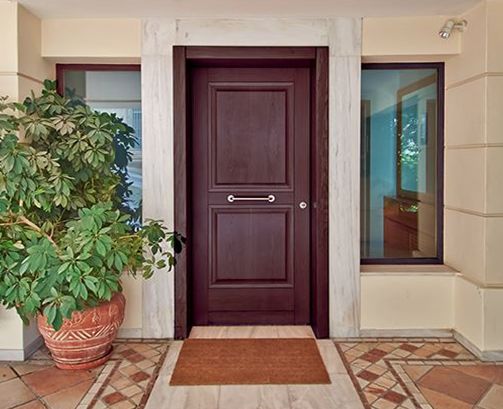
Front Door

The millennial generation (Gen Y) was responsible for about one-third of residential real estate transactions in 2013. In his session at Agent Reboot, real estate coach and trainer Travis Robertson shared how Gen Y is already reshaping the real estate buying and purchasing process.

Much has been written about the differences between baby boomers and Gen Y, but we are just beginning to see how these differences are playing out in real estate. Like it or not, with the median age of Realtors at 57 and the median age of first-time buyers at 31, both generations must learn to adapt to each other.

Robertson outlined some rather surprising facts about what to expect when you work with Gen Y, as well as how you can best serve them.

Solar Tubes Beat Traditional Skylights for Low-Cost Daylighting

Get the natural light that skylights provide — but with less cost and less hassle — by installing solar tubes instead.

How it works
Known variously as a sun tube, sun tunnel, light tube, or tubular skylight, a solar tube is a 10- or 14-inch-diameter sheet-metal tube with a polished interior. The interior acts like a continuous mirror, channeling light along its entire length while preserving the light’s intensity. It captures daylight at the roof and delivers it inside your home.

On your roof, a solar tube is capped by a weather-proof plastic globe. The tube ends in a porthole-like diffuser in the ceiling of a room below. The globe gathers light from outside; the diffuser spreads the light in a pure white glow. The effect is dramatic: New installations often have home owners reaching for the light switch as they leave a room.

Cost
A light tube costs about $500 when professionally installed, compared to more than $2,000 for a skylight. If you’re reasonably handy and comfortable working on a roof, install a light tube yourself using a kit that costs $150 to $250. Unlike a skylight, a light tube doesn’t require new drywall, paint, and alterations to framing members.

How much light?
A 10-inch tube, the smallest option, is the equivalent of three 100-watt bulbs, enough to illuminate up to 200 sq. ft. of floor area; 14-inch tubes can brighten as much as 300 sq. ft.

Popular locations for a light tube include any areas where constant indirect light is handy:

  • hallways
  • stairways
  • walk-in closets
  • kitchens
  • bathrooms
  • laundry rooms

The only place you don’t want a light tube is above a TV or computer screen where it might create uncomfortable glare.

Bringing a light tube through multiple levels
Channeling light down to the first floor of a two-story house is feasible if you have a closet or mechanical chase through which you can run the tube. The job can quickly become more complicated if there’s flooring to cut through, or if you encounter wiring, plumbing, and HVAC ducts.

Is your house right for a light tube?
Because installation requires no framing alteration, there are few limitations to where you can locate a light tube. Check the attic space above to see if there is room for a straight run. If you find an obstruction, elbows or flexible tubing may get around it. It’s relatively easy to install a light tube in a vaulted ceiling because only a foot or so of tubing is required.

Make these evaluations in advance:

  • Roof slope: Most light tube kits include flashing that can be installed on roofs with slopes between 15° (a 3-in-12 pitch) and 60° (a 20-in-12 pitch).
  • Roofing material: Kits are designed with asphalt shingles in mind, but also work with wood shingles or shakes. Flashing adapters for metal or tile roofs are available.
  • Roof framing spacing: Standard rafters are spaced 16 inches on-center; gap enough for 10- or 14-inch tubes. If your home has rafters positioned 24 inches on-center, you can special order a 21-inch tube for light coverage up to 600 sq. ft.
  • Location: A globe mounted on a southwest roof gives the best results. Choose a spot requiring a run of tubing that’s 14 feet or less. A globe positioned directly above your target room can convey as much as 98% of exterior light. A tube that twists and turns minimally reduces the light.
  • Weather: If you live in a locale with high humidity, condensation on the interior of the tube can be a problem. Wrapping the tube with R-15 or R-19 insulation greatly cuts condensation. Some manufacturers offer sections of tubing with small fans built in to remove moist air. If you live in a hurricane-prone area, opt for an extra-hardy polycarbonate dome.