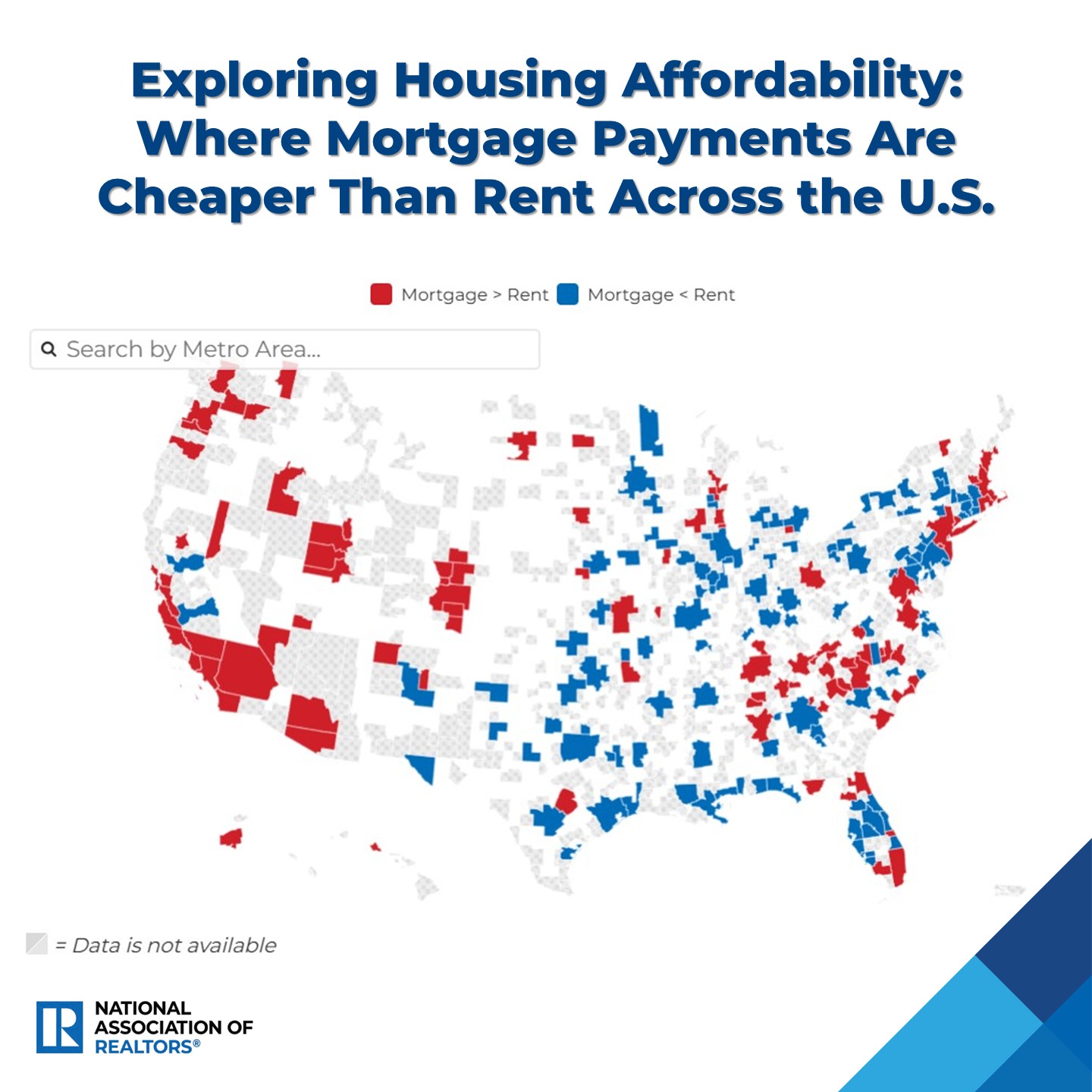
Where Mortgage Payments Are Cheaper Than Rent

Over the past five years, housing prices and rents have surged, making it difficult to save for a down payment. However, in 119 out of 215 metro areas, monthly mortgage payments are lower than rent, mainly in the Midwest and South.

Explore the data collected by the National Association of Realtors.

Buying and Selling a Home at the Same Time: How Bridge Loans Can Help


One of the biggest stressors for home buyers and sellers is the prospect of being financially responsible for two homes. To avoid that possibility, many buyers make their offer contingent on the sale of their existing home. But contingencies can weaken buyers’ chances of landing the home they want. So, some buyers lean on personal loans, piggyback loans or even their 401(k) savings.

Find out why more borrowers are temporarily tapping the equity in their current home to avoid making a contingency offer on their next home.

Read the details

What Percentage of Your Paycheck Should Go To Your Mortgage Payment?


The road to homeownership has been a challenge for many Americans—stubborn mortgage rates and inflation keep this dream out of reach for many. And for those who can afford a home, not ending up “house poor” is also key.

Read more…


The Five-Year Rule for Home Price Perspective


Headlines are saying home prices are starting to dip in some markets. And if you’re beginning to second guess your plans based on what you’re hearing in the media, here’s what you need to know.


Final Walk-Through Red Flags


Final walk-throughs can uncover problems that could delay closing. Most walk-throughs go smoothly, but it’s useful to know what to watch for and how to resolve issues quickly.

Read the details…


The Biggest Perks of Buying a Home This Winter


Waiting for perfect market conditions often means missing out. Because what you may not realize is, if you’re ready and able to buy, this time of year could actually give you an edge. Here’s why. As the weather cools down, the housing market can too – and that works in your favor.

Read the article…


5 Questions to Ask When Buying a Fixer-Upper


When purchasing a property that could use a little (or a lot of) work, make sure you’re truly prepared to take on the task.

Buying an outdated, or even dilapidated, property can be exciting for those with a DIY mindset and creative vision. For many, it provides a chance to own a home that has more square footage, is situated on a bigger lot, or has a sought-after location. Plus, with properties like these, the purchase price is often lower than market comps, which can mean lower monthly mortgage payments.

An early 2024 survey from RE/MAX found that of consumers looking to buy a home this year, 56% were interested in considering a fixer-upper as a creative way to achieve homeownership amid changing (and sometimes challenging) market conditions. Of those who were open to the option, more than half were willing to do so based on location.

Don’t be fooled, however, by reality TV shows that gloss over the details in what can be a complex process – projects like these often require abundant time and resources, with costs adding up along the way.

Here are five fixer-upper questions to consider:

1. How much can you afford for renovations?

Cost will lay the groundwork for all plans pertaining to the renovation process – and setting a budget ahead of time will help you prioritize what to fix. It’s generally better to overestimate the potential costs to account for unexpected situations that might pop up along the way. Ultimately, the budget depends on your personal financial situation, as well as location, property type, renovation goals, and more.

Some people work with a lender on financing solutions, like home improvement loans, if they meet qualifying criteria.

2. What was the outcome of the home inspection?

A home inspection is an essential step when buying any property – and it’s extra important with a fixer-upper. A professional inspector focuses their examination to the home’s physical structure and major systems. They’ll look closely at the foundation, as well as the structural integrity of floors, walls, ceilings, and the roof. They’ll also check the functionality of windows, doors, HVAC system, electrical, and more.

With fixer-uppers, there’s a higher likelihood of some of these features being compromised. Costs for repair and restructuring can vary depending on the issue and the severity of damage or wear.

3. What scale of renovation does the place need?

You may hear people saying a house has “good bones.” Essentially, if a house is structurally sound and just needs some cosmetic upgrades, it’s a very different process than if it requires larger-scale demolition. Before you take on a fixer-upper, consider the scale of the necessary renovations to determine the feasibility of your plans.

It’s important to also think about who would be doing the work. Hiring contractors can be much more costly than going true DIY. It’s also critical to identify health hazards that may be present, like asbestos, mold, lead paint, and more – and always hire professionals to remove toxins like these in a safe manner.

4. What permits will be required to complete the project?

Each city and town has regulations and restrictions on residential construction. Some places, for example, allow grandfathered property rights or adhere to strict rules that limit the current-day building potential of structures and footprint additions. Many larger-scale home repairs require permits and inspections during the process.

As you determine what fixes need to be made, check with the local government to make sure your plans are legally compliant before starting any form of demolition.

5. Can you wait to live there until renovations are completed?

Priorities will likely take shape based on the condition of the home. Some people buy a fully functioning house that simply has outdated style, prompting them to make cosmetic upgrades. In cases like these, many choose to space out renovations over time and slowly update the place room-by-room while living there.

For those who go with a more dilapidated structure, the fixing of essential features – like foundation, roof, HVAC, etc. – will likely take priority over aesthetic changes, and need more urgent attention before the space becomes habitable.

Whether you’re looking for a fixer-upper or move-in-ready home, contact me! I’ll be happy to help you get the process started!


Back to Basics: The ABCs of Achieving Homeownership


Buying a home is the largest transaction most people will make in their lifetime. It’s an exciting milestone, but the process can be complex.

In honor of National Homeownership Month this June, people getting ready to dive in can heed these helpful tips – the ABCs of achieving homeownership.

A: Align yourself with a trusted advisor

Working with a real estate agent you trust can make a world of difference when buying a home – especially if you’re a first-timer. A trusted advisor will go through the process with your best interests in mind, explain essential industry terms, help determine your priorities, negotiate on your behalf, and do so much more.

Experience is a top quality to consider when you’re choosing which agent to work with. (And look for a full-time professional, too. Your purchase is too important for a part-timer.) Experience can be quantified in a few different ways – like years in the industry, real estate specialties, and neighborhoods they conduct business in. What’s helpful: Not only do RE/MAX agents have the experience to get the job done in today’s market, but they also average more sales than other real estate agents.

Another important component of the trusted professional you choose to work with is their communication style. It’s smart to align with someone who is communicative and easily accessible, and who also outlines their preferred methods of contact during the homebuying process upfront.

B: Be sure your finances are in order

Ultimately, your home purchase is a financial transaction, so it’s best to analyze your financial situation – and get things in order – before you find a house you want to buy. Unless you’ll be paying cash (and if you are, congratulations!), you’ll be working with a mortgage lender who considers factors like credit score, debt-to-income ratio, and more to determine what kind of financing you qualify for.

These factors will be helpful in the pre-approval process, too, where the lender estimates how much house you can afford. This provides a framework for setting a budget and establishing your price range. In this step, make sure to budget beyond the down payment and monthly mortgage payments for the ongoing expenses of homeownership, like maintenance.

C: Consider your options

Before shopping for a house, start by making a list of wants and needs. This can help keep priorities straight as you begin looking at prospective properties that fit your lifestyle and income.

Consider what you need when it comes to space, storage, and outdoor functionality – and be realistic about which locations work for you, and which don’t. That way, you can focus your time and energy touring places that have a higher likelihood of being your ideal match.

Housing inventory and home prices will look different in every market. Curious about current housing market conditions around the U.S.? Check out the latest RE/MAX National Housing Report coverage.

Contact me for a complimentary in-person or online consultation!


Proposed Settlement by the National Association of REALTORS®


Many of you may have heard about this over the last week. Sadly there is A LOT of misinformation out there. I’ve given it a lot of thought and think that the NWMLS’s statement summarizes it best for the majority of Washington State:

“NWMLS is owned by its member real estate firms and not affiliated with NAR.

Beginning in 2019, and continuing in 2022, NWMLS made changes to its rules, forms, and processes that address the issues raised by the national litigation and outlined in the proposed settlement agreement. NWMLS’s changes enhanced transparency, consumer choice, and negotiation opportunities related to broker compensation.

NWMLS’s most recent efforts, in cooperation with Washington REALTORS®, culminated in revisions to the Washington state “Agency Law” that were effective January 1, 2024. As a result, Washington law already requires brokers to enter into a services agreement to represent a buyer, which is one of the primary “practice changes” in the proposed settlement agreement.

While NWMLS’s system of rules and forms, together with the revised Agency Law, provide both buyers and sellers with complete transparency, choice, and control of broker compensation, NWMLS and its members will continue to take advantage of every opportunity to enhance the quality of real estate brokerage services in the Northwest.”

Watch this 30 second video that highlights what Washington REALTORS® recently did to advocate for more transparency in real estate.

4/23/24 Update: Judge Bough granted the Plaintiffs’ Motion for Preliminary Approval of this agreement, which means that the settlement agreement is preliminarily approved.

Don’t hesitate to call or contact me with any questions!


‘How Much House Can I Afford to Buy?’ Here’s How to Know

If your biggest question right now is “Can I afford to buy a home?” – or “How much home can I actually afford to buy?” – you aren’t alone. As the real estate market continues to shift, many people are wondering how far their money will take them.

From researching your local housing market to exploring home loan options, a few early steps can help you prepare before starting on the homebuying process. Here are five ways to help determine how much house you can afford.

1. Check up on your credit score

Before you’re ready to start the homebuying process, familiarize yourself with your credit score. If you aren’t satisfied with the number, you’ll want to give yourself time to raise it before you apply for a loan – this will be a key factor a mortgage professional takes into consideration. Many major credit card companies will give you monthly updated credit score reports on their websites and apps.

2. Get pre-approved for a home loan

Seek out a local mortgage professional to help you understand what you qualify for and set a realistic homebuying budget. A mortgage prequalification provides a basic estimate of how much you can borrow based on your stated financial situation. When you’re ready, complete a mortgage application in which a lender confirms your qualifications with more stringent documentation and can then provide a formal pre-approval. Working with a mortgage broker may provide an easy way to explore different lenders and loan products that meet your unique needs.

3. Consider how much money you have saved

It’s essential to figure out how much money you’ll be able to put toward a down payment on a home – and this number will impact what your monthly mortgage payments will be, too.

For renters, if your monthly mortgage payment will cost more than your current rent, are you able to afford the difference?

Keep in mind that expenses won’t stop at the down payment and mortgage. Be prepared to cover costs for closing and moving, various fees that may come up in the process, home insurance, private mortgage insurance (if you put less than 20% down), and more. Plus, it’s wise to have a comfortable level of savings for home maintenance and repair.

4. Seek advice from a financial advisor

Meeting with a financial advisor can help you prioritize financial concerns, learn how to manage your money, and plan ahead for the future.

5. Look at data for your local housing market

When it comes to home prices, no two markets are the same – and the cost of living (which includes the expense of homeownership) varies depending on location. That’s why it’s helpful to find an experienced real estate agent who you trust to help with your important transaction. They can help demystify local housing market data, prioritize your wants and needs in your purchase, and get the ball rolling in the home search process.

Understanding local market conditions will also help establish a realistic expectation of what kind of property you can afford in your desired area. Looking at active and recent listings is one way to get a better feel for what home prices are like.

Ready to start your homebuying journey? Contact me for a complimentary consultation!