A patio can enhance the time you spend outdoors, add value to your home and save you money on landscaping maintenance. Just the thought of a patio evokes images of sun-drenched afternoons, relaxing evenings, cocktails and fireflies. In almost every case, a patio is a very attainable DIY project, as long as you plan well and choose wisely. The task is made more difficult, however, by the huge range of available materials, colors and patterns. Before you start a patio building project, it’s important to research your options and determine which material best suits your needs and abilities.
Tag Archives: improvements
A Kitchen Clean Up Pays When Selling Your Home
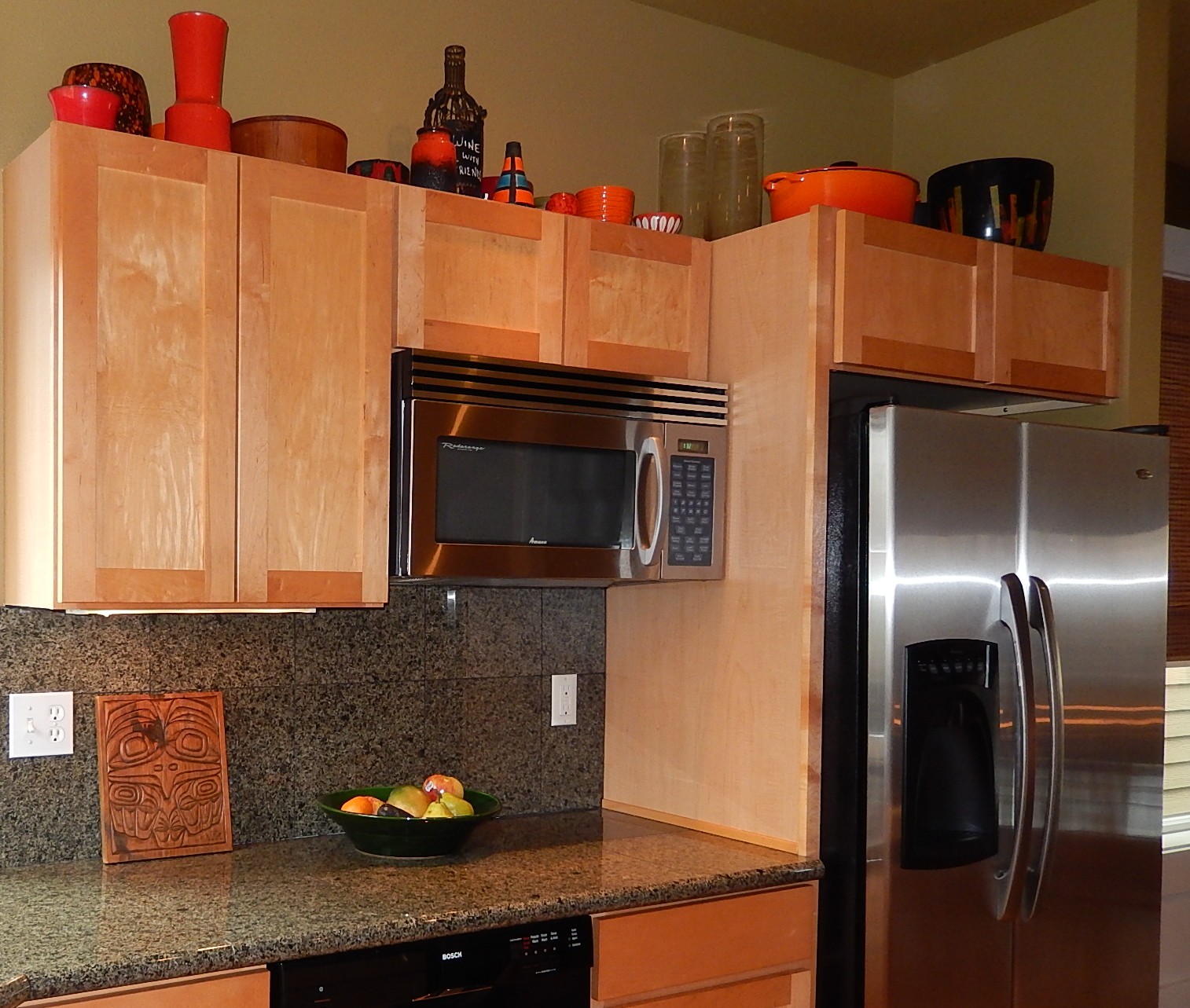
When it comes to selling a home, a kitchen clean up pays. You don’t have to do an expensive remodel to make your kitchen appealing to buyers. If you’re starting with a good kitchen space, then making a few inexpensive modifications can help you get your home noticed and sell for more money.
Choosing a New Hot Water Heater
Save energy and avoid the risk of leaks by replacing your hot water heater. With new technology and tax credits on efficient models, now is the time!
Solar Tubes Beat Traditional Skylights for Low-Cost Daylighting
Get the natural light that skylights provide — but with less cost and less hassle — by installing solar tubes instead.
How it works
Known variously as a sun tube, sun tunnel, light tube, or tubular skylight, a solar tube is a 10- or 14-inch-diameter sheet-metal tube with a polished interior. The interior acts like a continuous mirror, channeling light along its entire length while preserving the light’s intensity. It captures daylight at the roof and delivers it inside your home.
On your roof, a solar tube is capped by a weather-proof plastic globe. The tube ends in a porthole-like diffuser in the ceiling of a room below. The globe gathers light from outside; the diffuser spreads the light in a pure white glow. The effect is dramatic: New installations often have home owners reaching for the light switch as they leave a room.
Cost
A light tube costs about $500 when professionally installed, compared to more than $2,000 for a skylight. If you’re reasonably handy and comfortable working on a roof, install a light tube yourself using a kit that costs $150 to $250. Unlike a skylight, a light tube doesn’t require new drywall, paint, and alterations to framing members.
How much light?
A 10-inch tube, the smallest option, is the equivalent of three 100-watt bulbs, enough to illuminate up to 200 sq. ft. of floor area; 14-inch tubes can brighten as much as 300 sq. ft.
Popular locations for a light tube include any areas where constant indirect light is handy:
- hallways
- stairways
- walk-in closets
- kitchens
- bathrooms
- laundry rooms
The only place you don’t want a light tube is above a TV or computer screen where it might create uncomfortable glare.
Bringing a light tube through multiple levels
Channeling light down to the first floor of a two-story house is feasible if you have a closet or mechanical chase through which you can run the tube. The job can quickly become more complicated if there’s flooring to cut through, or if you encounter wiring, plumbing, and HVAC ducts.
Is your house right for a light tube?
Because installation requires no framing alteration, there are few limitations to where you can locate a light tube. Check the attic space above to see if there is room for a straight run. If you find an obstruction, elbows or flexible tubing may get around it. It’s relatively easy to install a light tube in a vaulted ceiling because only a foot or so of tubing is required.
Make these evaluations in advance:
- Roof slope: Most light tube kits include flashing that can be installed on roofs with slopes between 15° (a 3-in-12 pitch) and 60° (a 20-in-12 pitch).
- Roofing material: Kits are designed with asphalt shingles in mind, but also work with wood shingles or shakes. Flashing adapters for metal or tile roofs are available.
- Roof framing spacing: Standard rafters are spaced 16 inches on-center; gap enough for 10- or 14-inch tubes. If your home has rafters positioned 24 inches on-center, you can special order a 21-inch tube for light coverage up to 600 sq. ft.
- Location: A globe mounted on a southwest roof gives the best results. Choose a spot requiring a run of tubing that’s 14 feet or less. A globe positioned directly above your target room can convey as much as 98% of exterior light. A tube that twists and turns minimally reduces the light.
- Weather: If you live in a locale with high humidity, condensation on the interior of the tube can be a problem. Wrapping the tube with R-15 or R-19 insulation greatly cuts condensation. Some manufacturers offer sections of tubing with small fans built in to remove moist air. If you live in a hurricane-prone area, opt for an extra-hardy polycarbonate dome.

Home Design and Remodeling Trends For 2014
The end of the year brings many things. Special time spent with family and loved ones. Presents from Santa. The promise of a fresh start. And, if you’re like us, an insatiable desire to change up your environment by updating it with the latest trends.
If you are feeling the pull toward renovating, redecorating, or revising your home for 2014, here are some exciting trends you may want to incorporate.
Think Color in 2014
Gray is the new black; reclaimed wood and porcelain floors are made for walkin’; and wireless is controlling sound, window shades, TV, and more.
Whether it’s based on fashion, the economy, new technologies, or the overall mood of the country, home design trends come and go — sometimes slowly and sometimes lickety-split. But as with apparel, some trends become classics and remain strong — a Barcelona chair, for instance — while others go out the window (think avocado and harvest gold kitchen appliances).
Decorating Ideas to Eliminate Blank Wall Space
There’s nothing more stark or empty looking than a blank wall. Before you start buying and hanging art, check out these simple design ideas and art hanging how-to’s.
Save Big Bucks on Your Taxes
We’ve been looking at the new IRS regulations on how to classify repairs and improvements for tax purposes. The voluminous regulations contain some things that are pretty good for owners of residential rentals and commercial properties, and some things that aren’t so good.
Among the good things is a safe harbor for materials and supplies. An expense for any property that comes within this safe harbor may be currently deducted.
Exactly what are materials and supplies? Find out…
Small Home Improvements With Big Returns for Sellers
Even in a housing market where inventory is low, buyers still want a move-in ready house and are willing to pay more for one that’s turn-key. Sellers can increase their listing price and decrease the time their home sits on the market just by doing a few home improvement projects, experts say. But not all projects carry the same return.
“A big mistake a lot of home sellers make is they upgrade the kitchen thinking they will make so much more money on the house. But the rest of the house still needs upgrading or repairs,” says Michael Corbett, Trulia’s real estate expert. Home sellers have to look at repairs as a whole rather than a sum of parts, he says.
Good News for Owners of Smaller Residential Rental Properties
A recent column (“IRS finally provides guidance on building repairs vs. improvements“) explained that the IRS has finally issued the final version of its monumentally long and complex regulations explaining how to deduct improvements and repairs to business property, including commercial buildings and residential rentals.
The final regulations, which take effect Jan. 1, 2014, contain several pleasant surprises for small-business owners, including owners of rental properties. One of these is the “safe harbor for small taxpayers” (IRS Reg. 1.263(a)-3h).
This new reg allows a qualifying taxpayer to elect to not apply the IRS’s complex new improvement regs to an eligible building if the total amount paid during the year for repairs, maintenance, improvements and similar expenses does not exceed the lesser of $10,000 or 2 percent of the unadjusted basis of the building (usually, its cost).